
Why accuracy matters to you
You want tight joints, repeatable parts, and less waste. A simple change to your workflow can deliver that. Many small shops find that adding a cnc woodworking machine removes guesswork from hole placement and edge cuts, so every piece fits the first time. This matters when orders are small, deadlines are close, and material cost is visible on each invoice.

User-first view: what a CNC drilling station actually fixes
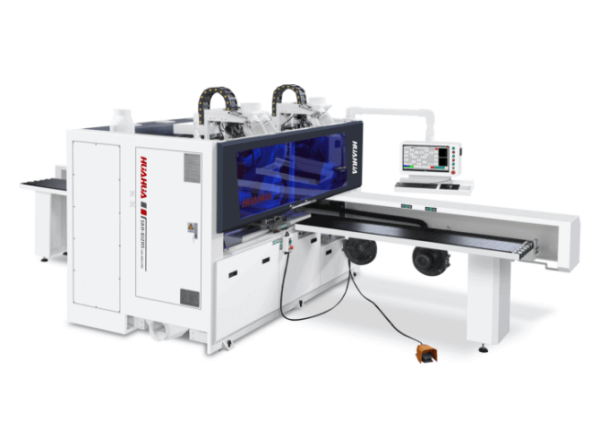
Begin with the user problem: manual drilling drifts, human layout varies, and rework grows. A CNC drilling machine locks the program, the spindle path, and the stop points into code. You get consistent hole centers, exact depths, and identical spacing across dozens of parts. For a shop owner, that means less measuring, fewer scraps, and faster assembly. The machine handles repeatability; you handle value-added work.
Concrete features that translate to better cuts
Tool-length compensation corrects for cutter wear so depth stays accurate. Rigid fixturing and vacuum hold-down stop parts from shifting under load. Automatic tool changers reduce manual error between operations. Probe or touch sensors let the controller find edge and datum points, so an offset is calculated from the real part, not a guessed origin. These features combine to reduce positional error from millimeters to fractions of a millimeter.
Practical steps for implementation
Start small. Calibrate spindle runout and verify with a dial indicator. Use quality drill bits and set speeds/feeds recommended for your wood species. Create simple fixtures first: clamps, spoil boards, and stay-down tabs. Program a test panel and run it at low feed while watching for vibration or burn. Log the first-run measurements and adjust offsets. Repeat until your parts hit spec consistently.
Common mistakes that undo accuracy
People often assume a CNC fixes everything. It does not. Poor clamping, dull cutters, and inconsistent material thickness still cause errors. Skipping routine calibration lets thermal drift creep into dimensions. Relying on a single drill program for mixed-thickness stock creates problems. Avoid these by scheduled maintenance, tooling checks, and batch grouping by thickness before nesting.
Alternatives and quick evaluation
Manual jigs cost less up front but need steady hands and slow setup. Dedicated boring machines are fast for simple panel work but lack routing flexibility. A CNC router with a drilling spindle gives balance: it routes profiles and drills holes in one program. For many local shops this hybrid choice offers the best return on space and operator time.
Industry context and trustworthy perspective
Manufacturers show these lessons repeatedly at major trade fairs like LIGNA, where precision features and tooling are demonstrated side by side. From visits to production floors and discussions with woodworking cnc machine manufacturers, I’ve seen the same pattern: shops that pair rigid fixturing with probing and disciplined maintenance reduce rework markedly. That combination gives you the real-world reliability you need.
Final synthesis and practical value
Focus on process: calibrate, fixture well, choose correct tooling, and validate programs with test cuts. Do these, and your cutting accuracy improves measurably; your fit-up and finishing time fall. For a straightforward solution that blends drilling precision with panel routing, a reliable supplier and proper setup matter more than flashy specs—just as companies such as HUAHUA CNC demonstrate through practical machine design and field support.