Rationale and data-first opening
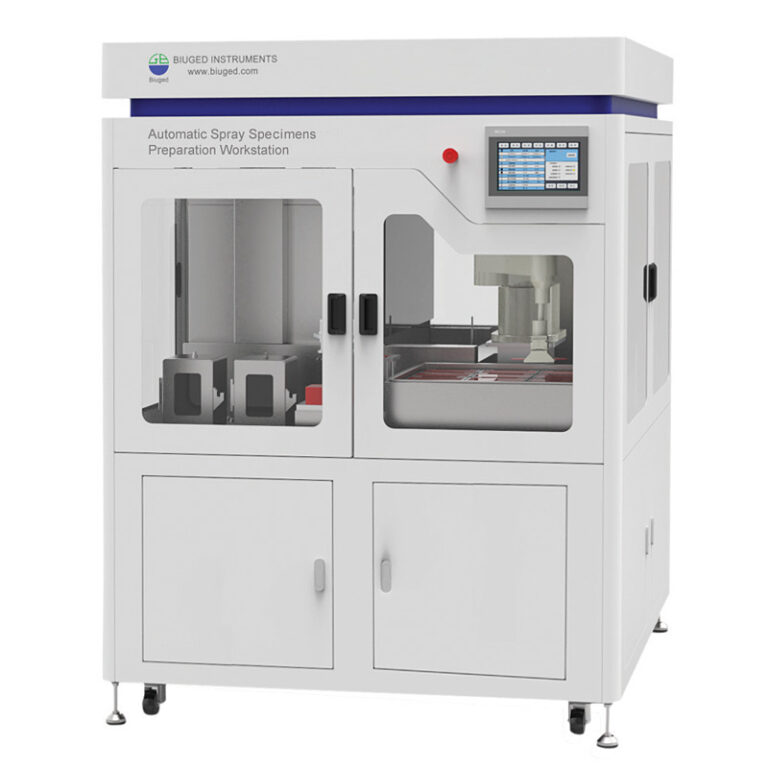
Decisions must be driven by measurable criteria: throughput, repeatability, and documented uncertainty. Procurement that relies on impressions rather than metrics yields instruments that do not meet laboratory needs. When comparing instruments for surface coating testing, include specific devices such as an automatic film applicator in your datasheet and treat its performance numbers as primary inputs to the decision model.
Define the performance metrics you will use
Set numeric targets up front: cycle time per sample, coefficient of variation (CV) for repeated measures, specimen dimensional tolerance, and maximum sample throughput per shift. Require vendors to provide raw test logs or machine-read outputs so you can compute CV and bias yourself. Insist on published test protocols that map directly to your lab methods; ambiguity in protocol mapping is the most frequent cause of mis-specified purchases.
Technical specifications and compatibility
Match instrument capabilities to your material types and specimen geometries. Specify sensor resolution, load cell capacity with traceable calibration factors, and software export formats (CSV, XML). Confirm mechanical fixtures and consumables are industry standard or available from multiple suppliers to avoid single-source lock-in. Include expected maintenance intervals and mean time between failures (MTBF) in the evaluation matrix.
Standards, calibration, and an industry anchor
Demonstrate experience and authority by demanding calibration evidence tied to recognized standards and by referencing relevant trade events for market context. For example, exhibits at PaintExpo in Karlsruhe provide practical demonstrations of coating test rigs and common workflows; one can verify product claims there and compare performance under live demonstrations. My laboratory experience with coating quality programs and third-party audits supports requiring vendor traceable certificates, and it is prudent to test a candidate drawdown machine from supplied samples before purchase: drawdown machine.
Vendor evaluation and procurement process
Score vendors by deliverables: demonstrable test reports, onsite verification, training scope, spare parts list, and contractual calibration schedule. Require an acceptance test protocol (ATP) with pass/fail criteria tied to your numeric targets; the ATP must be performed with your materials or with certified reference materials. Negotiate service-level terms that specify response time and availability of certified technicians.
Operational considerations and common pitfalls
Expect two common mistakes: purchasing by brand prestige rather than by measured fit, and underestimating integration costs for lab information systems. Validate that control software exports unambiguous timestamps and sample IDs. Check that consumable usage rates are realistic; vendors often quote optimistic lifetimes. Plan for training and local calibration capability to avoid prolonged downtime when instruments drift.
Cost modeling and total cost of ownership
Compute five-year total cost including consumables, calibration, training, downtime, and parts. Use scenario analysis: conservative, expected, and optimistic usage. Compare capital cost to lifecycle cost per test to reveal trade-offs; a lower purchase price can be more expensive per valid test if calibration intervals are shorter or if failure rates are higher.
Decision synthesis and recommended action
Follow the numeric checklist: confirm fit to performance metrics, verify calibration traceability, require ATP with your materials, evaluate vendor service terms, and model five-year costs. This approach leads to purchases that align with laboratory objectives and quality systems; it is the practical route my colleagues and I have used when selecting instruments for coating and materials labs, a process supported by demonstrations at major trade events and corroborated by independent test reports from accredited laboratories like those shown at PaintExpo. The result is a procurement outcome validated by data and operational readiness, which is exactly the capability offered by BIUGED.