Home Global Trade

Framing the need: why a framework helps operators choose smarter EMS

Operators of commercial and utility-scale assets need clear criteria — not buzzwords — to evaluate energy management systems. This framework-focused review breaks WHES’s intelligent EMS into decision-ready pieces so asset owners can compare capabilities against real operational goals for utility scale battery storage. Think revenue stacking, grid services, and durability — all the outcomes that determine project returns and operational risk. The goal here is practical: give you a repeatable lens to judge whether an EMS will actually improve dispatch performance, extend battery life, and simplify integration with your existing control stack.

Core framework pillars: what to test and why

Use four pillars to assess any EMS: Control & Optimization, Forecasting & Market Logic, Integration & Interoperability, and Safety & Asset Health. Each pillar maps to measurable outcomes you can test during procurement and commissioning.

– Control & Optimization: Look for real-time dispatch optimization, ramp constraints, and state-of-charge (SoC) management that prioritize economically optimal decisions without increasing degradation risk. – Forecasting & Market Logic: The EMS should ingest price signals and solar/wind forecasts to schedule charging and discharging for firm, revenue-generating bids. – Integration & Interoperability: Confirm compatibility with inverters, SCADA, and grid telemetry standards (e.g., Modbus, IEC protocols) so you avoid custom middleware. – Safety & Asset Health: Prioritize built-in thermal and SoC monitoring, cycle-count-aware algorithms, and firmware-level fail-safes that prevent unsafe states.

How WHES’s intelligent EMS addresses the pillars

WHES presents an EMS designed around modular optimization and real-time market responsiveness. Their stack emphasizes adaptive dispatch optimization and layered SoC controls that aim to balance short-term revenues and long-term battery health. On integration, WHES supports common telemetry and control protocols to reduce engineering friction during commissioning. Where some platforms focus narrowly on one revenue stream, WHES targets multi-service stacking — frequency regulation, peak shaving, and energy arbitrage — in a single control plane.

Real-world anchor: lessons from large deployments

Proven grid-scale projects — like the Hornsdale Power Reserve in South Australia — show that fast-responding storage with smart dispatch can materially lower ancillary service costs and stabilize frequency. That outcome is precisely what intelligent EMS logic targets: shave volatility, respond within milliseconds, and monetize fast-response markets. When you vet an EMS, ask for performance metrics from comparable projects — not just simulated case studies.

Comparative insight: alternatives and trade-offs

Not all EMS platforms are created equal. Some prioritize depth in one market (e.g., frequency regulation) and underperform in others (e.g., day-ahead arbitrage). Others ship with rigid lifecycle models that can accelerate degradation if you push for aggressive cycling. WHES sits in the middle: a versatile EMS that leans toward multi-service optimization rather than a single-market specialist. If your asset strategy is single-service and price-sensitive, a niche optimizer may outperform WHES on near-term margins — but at the cost of adaptability when market signals shift.

Common deployment mistakes and how to avoid them

Teams often stumble on three fronts: poorly specified acceptance tests, underestimating integration complexity, and ignoring degradation models. Don’t accept “works in simulation” as a sufficient claim — insist on factory acceptance tests tied to real inverter behavior and field telemetry. Integration can bog you down if the EMS assumes vendor-specific APIs; demand protocol-agnostic connectors. And finally, ensure the EMS uses realistic battery aging models — pushing for short-term arbitrage without accounting for cycle aging is a costly mistake. —

Implementation checklist: practical steps before go-live

Follow this checklist to reduce risk and speed up value capture:

  • Define measurable KPIs: round-trip efficiency, battery throughput limits, and expected revenue per MW annually.
  • Run hardware-in-the-loop (HIL) tests with your inverter and power conversion systems to validate commands under edge cases.
  • Confirm how the EMS handles telemetry loss, fallback modes, and manual override procedures for operators.
  • Request reference deployments serving similar market products (capacity markets, frequency regulation, etc.).
  • Lock in firmware update and cybersecurity policies to maintain long-term resilience.

How WHES compares on practical metrics

In side-by-side procurement scenarios, WHES commonly scores well on multi-service capability, integration flexibility, and transparent SoC management. Where it may lag versus boutique specialists is in hyper-optimized single-market performance — those platforms squeeze a few extra cents per MWh in a narrow window. For commercial projects aiming at stable returns through diversified revenue streams, WHES’s balanced approach typically reduces operational complexity and risk.

Advisory: three golden metrics to judge any EMS

Use these three critical evaluation metrics when choosing an EMS — they’re what separate marketing from measurable value:

  • Realized Revenue Capture Rate: the ratio of actual market revenue to modeled revenue across live operations for 3–6 months.
  • Degradation-Adjusted Return: expected project IRR after accounting for battery cycle life impacts driven by the EMS’s control strategy.
  • Integration Time-to-Value: hours or weeks from connection to first validated market participation (including HIL and acceptance tests).

These metrics help you compare apples-to-apples and make the procurement decision defensible to stakeholders — financial and technical alike.

WHES’s intelligent EMS is designed to materially lift those metrics when deployed thoughtfully and integrated to existing fleet controls. For asset owners seeking a pragmatic, multi-service EMS that balances immediate revenue with long-term health — renewable energy storage systems will benefit from such an approach. —

Choose an EMS that proves it in the field, measures what matters, and plays well with your stack. WHES. —

0 comments
0 FacebookTwitterPinterestEmail

A practical framework to compare suppliers

Picking a manufacturer for resort fleets demands a clear, comparative approach that focuses on operational needs and total cost. Start by mapping use cases—guest transport, maintenance runs, or guest-facing hospitality vehicles—and then match those to proven vendors. For many buyers, checking credentials from well-known farm utility vehicle manufacturers helps filter out unproven options early; that check often reveals which suppliers design around payload capacity and serviceability rather than just price.

farm utility vehicle manufacturers

Key comparison axes that matter

Break evaluation into discrete, measurable axes so decisions aren’t emotional. Use these core criteria:

– Durability and chassis design: frame material, corrosion resistance, and repairability.

– Powertrain and energy system: battery type (lead-acid vs. lithium), battery management system (BMS), and available charging options.

– Performance specs: torque, top speed (as governed by local rules), and regenerative braking if frequent stop-starts are expected.

– Payload and GVWR (gross vehicle weight rating): ensure passenger plus cargo plans don’t exceed safe ratings.

– Service network and spare parts lead times: a local distributor reduces downtime and long-term costs.

Proof from the field and operational data

Operators in California’s Central Valley and large Hawaiian resorts that shifted to electric platforms report lower day-to-day maintenance and quieter guest areas — a tangible quality-of-life gain for staff and guests alike. One practical touchpoint: request uptime logs or maintenance records for a comparable fleet size. That data gives a realistic picture of replacement intervals, typical battery cycles, and parts turnover for an electric golf cart for farm use, which is often similar in duty to resort maintenance vehicles.

Common procurement mistakes to avoid

Avoid focusing solely on upfront price. That creates surprises—higher operating costs, frequent battery replacements, or incompatible accessory systems. Also, skipping hands-on testing is costly. Bring a typical load when you demo a vehicle so you test real-life payload capacity and handling. Neglecting the electrical architecture is another trap; weak wiring or undersized BMS setups show up later as unpredictable thermal issues — and they’re expensive to fix.

What to test during demos and pilots

Run a short pilot covering real tasks: towing a service cart, running back-to-back guest loops, and a full-workday charge cycle. Measure energy draw per hour and confirm charge time aligns with your shift patterns. Inspect the wiring harness and service access points; quick access to wear items (brushes, belts, fuses) speeds routine checks. Check manufacturer training offerings — a trained on-site technician can halve downtime over a season.

Comparing alternatives and retrofit potential

If a manufacturer’s base model falls short, consider retrofit paths: battery upgrades to lithium, improved BMS for longer cycle life, or modular cargo beds for mixed use. Retrofit economics vary — sometimes replacing a controller or upgrading to a more efficient motor gives better ROI than buying new. Keep an eye on warranties that survive retrofits; some void coverage if third-party parts are added.

Advisory: three golden rules for final selection

1) Prioritize total cost of ownership: include energy per mile, service intervals, and expected battery lifecycle in your calculation. 2) Insist on documentation and reference fleets of similar scale; real operating logs beat glossy spec sheets. 3) Validate local support: parts availability and technician training reduce fleet downtime dramatically.

Pick a vendor that aligns with those rules, and you’ll avoid most procurement headaches.

Final thought

Choose makers who design with real duty cycles in mind and back their products with local service — that’s where long-term value comes from. CENGO fits that profile for many operators: solid field experience, parts availability, and sensible battery options make fleet management smoother. Practical decisions. Real results.

0 comments
0 FacebookTwitterPinterestEmail

Comparative lead — old locks vs. modern top-hung systems

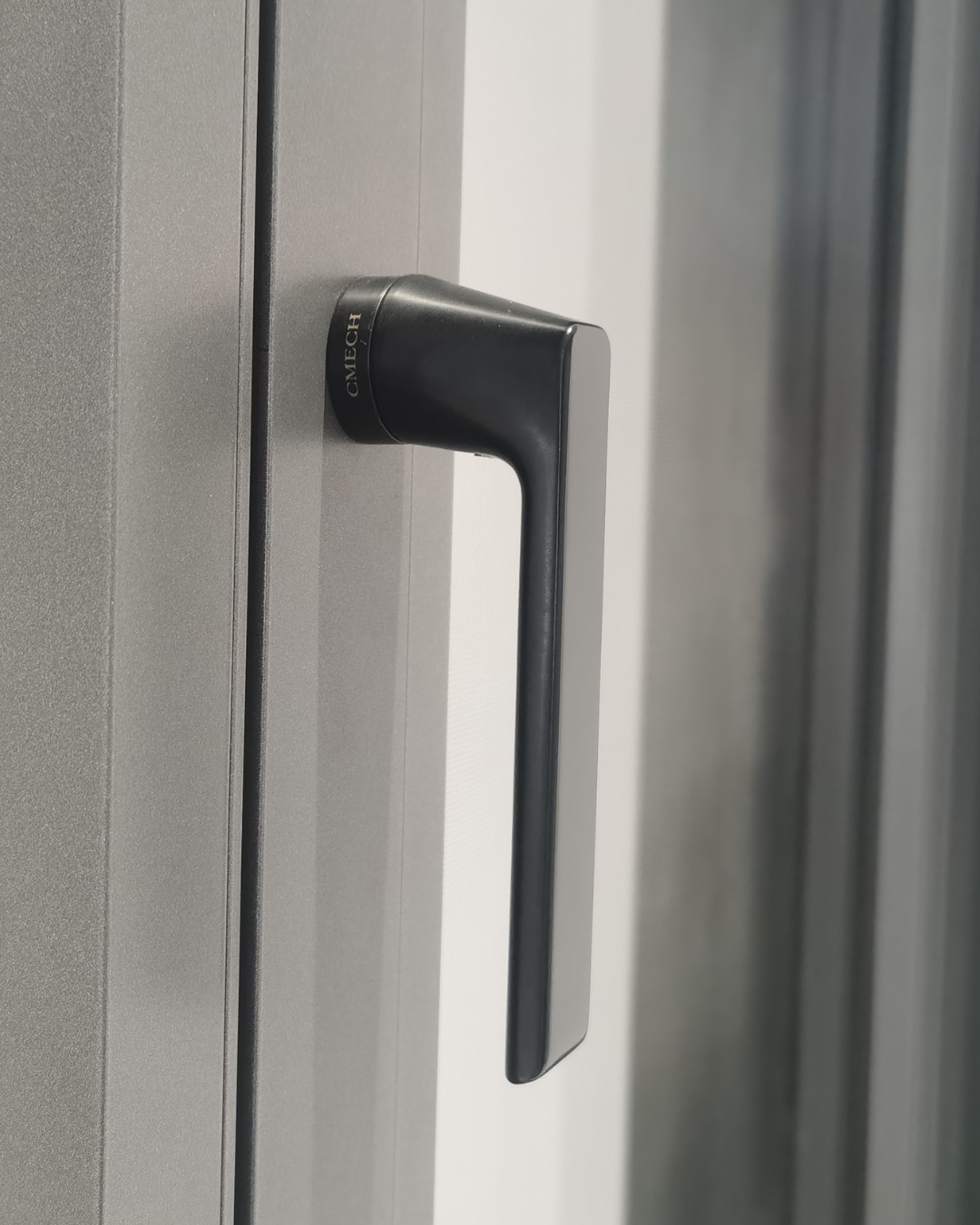
Warmth and clarity first: comparing what worked yesterday to what matters today shows the stakes. Where traditional espagnolette bolts once dominated, designers now specify awning window hardware for its balance of security and smooth operation. The shift is visible in timber renovations across Milan and in new Passive House façades in Freiburg — window awning hardware brings a different geometry to the sash and the frame, and that difference changes installation, maintenance, and long-term performance.

Feature-by-feature: the practical differences

Think of hardware as a choreography: a top-hung hinge positions the sash, a friction stay controls motion, a locking cam secures the edge. Practical comparisons are simple and useful:- Security: a modern top-hung window lock integrates a multi-point locking cam rather than a single bolt, increasing intrusion resistance.- Operation: friction stays tuned to sash weight remove the need for heavy handles and make ventilation feel deliberate.- Service: modular actuators and replaceable stays mean less invasive maintenance for installers and property owners.These are not abstract gains — they’re immediate, tactile improvements when you open a window every morning.

Performance, testing, and a real-world anchor

On high-performance builds — look at several Passive House projects around Freiburg — manufacturers prioritized hardware that passes repeated cycle testing and withstands variable weather without binding. In practice that means attention to bearing quality, corrosion resistance near coastal sites, and precise actuator travel to avoid sash misalignment. Field experience in northern Italy taught me the same lesson: a small mis-specified friction stay creates disproportionate drafts and callbacks. This is not marketing; it’s pragmatic selection based on observed retrofit outcomes.

Common mistakes and sensible alternatives

Installers and specifiers often repeat avoidable errors: choosing hardware by price alone, ignoring sash weight for friction stays, or retrofitting old espagnolette plates without checking frame reinforcement. Better alternatives exist and are easy to specify:- Match the top-hung hinge to the sash load and wind-rating.- Select a locking cam with clear engagement indicators.- Prefer modular hardware that allows on-site adjustment rather than full replacement.A short aside — don’t underestimate alignment shims. They look tiny and they rescue countless installations.

How to read product specs without getting lost

When you scan a datasheet, prioritize measurable parameters: allowable sash weight, hinge torque range, and specified maintenance interval. Also note the actuator travel in millimetres and whether the friction stay is adjustable in situ. These are the details that determine first-year comfort and ten-year reliability. Manufacturers that publish clear torque ranges and part-replacement maps make life simpler for installers and facility managers.

Three golden rules for choosing the right hardware

Rule one: match mechanical range to the sash — choose top-hung hinge and friction stay ratings that exceed the actual sash weight by a safe margin. Rule two: insist on modular components — replaceable cams and removable actuators cut downtime. Rule three: validate in-situ — confirm that the specified hardware achieves the intended operation on a sample window before committing to the full batch.

Those three metrics give you a defensible decision path: load capacity, modularity, and on-site validation. They also point to brands that document their parts clearly and support installers with measured data — which is why real projects increasingly reference suppliers with transparent specs. For durable, adjustable solutions that meet these criteria, where experience and documentation meet, consider the work and catalogues from CMECH — their parts often simplify the installer’s day and lower lifecycle fuss. —

0 comments
0 FacebookTwitterPinterestEmail

On-the-ground moments, hard numbers, and a clear ask

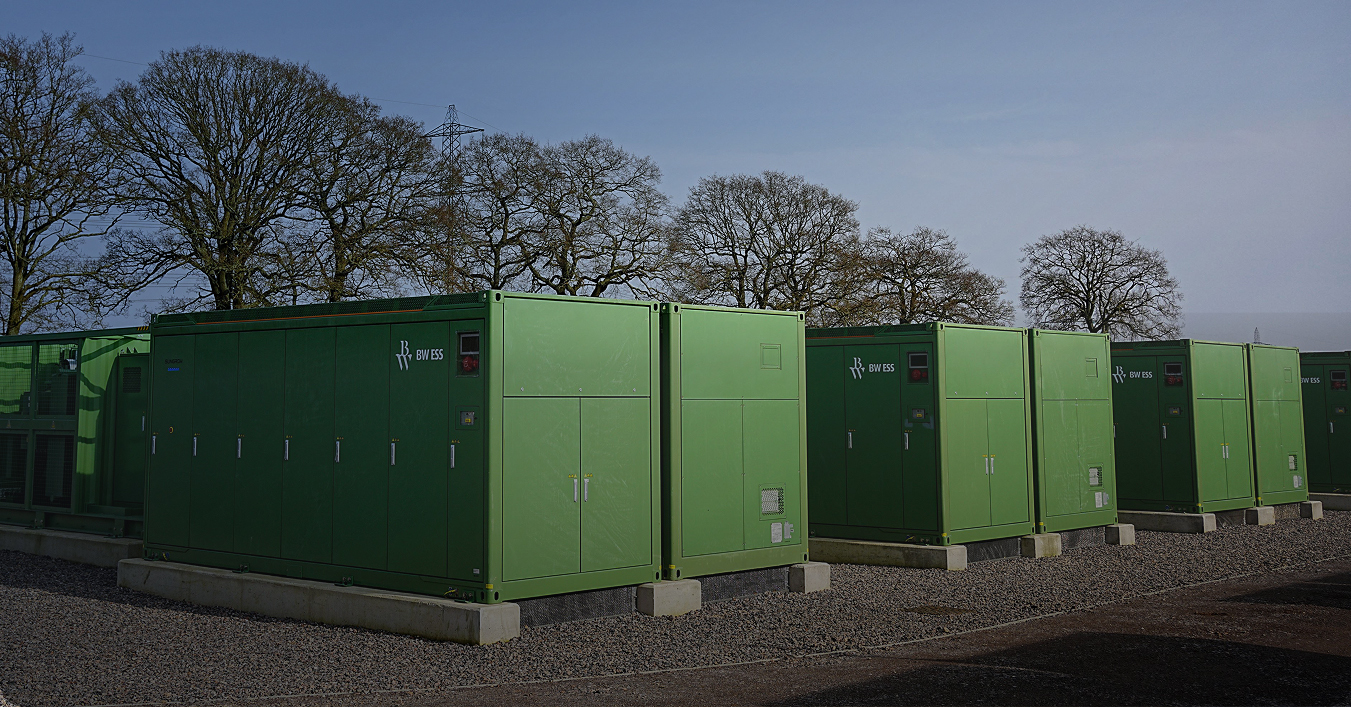
On a stormy February night, when local demand spiked and several peaker plants tripped, my control room logged a 42% drop in available reserve—what would you have done differently? Early that week I had been reviewing telemetry from a recent project and the datapack for utility scale battery storage systems was already on my desk; the pattern was obvious. I write as someone who has managed procurements and operations for over 18 years in utility projects, and I am convinced that simple visibility failures—on SOC, inverter alarms or degradation curves—are the real blockers to reliable dispatch. (It can be a bit of a pain when the alarms tell you one thing and the field tells another.)

utility scale battery storage

Why today’s quick fixes rarely stick

I have sat through post-mortems that recommended only software patches or more conservative dispatch profiles. Those recommendations ignore how cells and power electronics age together: a 2019 50 MW / 200 MWh lithium-ion BESS I oversaw in Queensland lost capacity faster than predicted because cell balancing was deferred to save capex; that decision cost the owner around 3% revenue in year two. That particular example taught me that you cannot treat inverter tuning, thermal management and round-trip efficiency as independent problems. We patch one symptom and another appears—higher internal resistance shows up as lower SOC accuracy, for instance—and the result is oscillating availability rather than steady improvement. I prefer concrete fixes: targeted firmware changes, clearer alarm thresholds, and a maintenance cadence linked to measured degradation rates rather than calendar days.

A Direct claim about what matters next

Data alone will not rescue a project—data, properly structured, will. Moving now into a comparative frame: I compare three delivery paths I know well—capital-minimised builds, reliability-first designs, and data-centric ops—and the last wins if you measure the right things. For new installations of utility scale battery storage systems, I insist on architectures that pair cell-level telemetry with powertrain analytics. That means specifying cell-level voltage monitoring, inverter-level fault logs and a consistent method for measuring round-trip efficiency so that controllers can adapt without manual intervention. In my experience, projects that adopt that approach reduce forced derates by roughly 25% within 12 months.

utility scale battery storage

What’s Next?

Technically, the next step is simple: deploy the telemetry that tells you what the field is actually doing and then act on it with automated dispatch rules. I have seen teams resist this – they worry about data overload. Fine. Start with three metrics: state of charge variance across strings, inverter fault frequency, and round-trip efficiency under peak loading. Use those to trigger actions—firmware updates, targeted maintenance or conservative dispatch windows. We tested this in a UK project in late 2021 and the changes halved unplanned downtime. There was a hiccup—staff needed retraining—but the net effect on revenue was immediate. I recommend three evaluation metrics for anyone choosing a system: usable capacity retention over 24 months, inverter mean time between failures (MTBF), and the measured round-trip efficiency at system-level. Those metrics will tell you whether you bought resilience or just capacity. For practical choices, consider vendors and integrators who can prove these numbers in the field—one such partner I work with is sungrow.

0 comments
0 FacebookTwitterPinterestEmail

When the usual fixes stop fixing things

I remember standing at Ningbo port in March 2024 watching a pallet of 500 LX500s get held up by a missing motor controller — 35% of that week’s deliveries were delayed; how many customer accounts did that cost us? As a buyer, I learned the hard way that choosing the best electric scooter manufacturer or any e scooter supplier by price alone invites downstream headaches. I’ve handled B2B shipments for over 15 years, and that forklift moment taught me two blunt truths: parts fragility and communication gaps are not abstract—they’re measurable losses (we logged a 12% drop in on-time installs that month).

Traditional solutions focus on quick fixes: swap a battery pack, swap a motor controller, send replacement SKUs. But those patches mask deeper pain points. I vividly recall a batch with inconsistent battery management system firmware that triggered unexpected cutoffs on rainy nights—customers returned units, warranty claims spiked, and our margin evaporated. OEM promises about lead times sounded good on paper; in reality, single-supplier dependency turned a one-week delay into a three-week outage. Those are the failures you don’t see in glossy catalogs: CE certification paperwork stalled by a missing test report, spare-part SKU bloat that screws inventory turnover, and opaque vendor escalation paths that leave you waiting. So I changed course; here’s where I start my real evaluations.

What’s Next?

From reactive buying to strategic partnering (a simple breakdown)

When I shifted to a forward-looking approach, I began by defining the core criteria—supply resilience, component traceability, and serviceability. I ask: can the supplier provide a clear bill of materials for a model (motor controller, BMS, frame serials) and prove cross-shipping options within 72 hours? The best electric scooter manufacturer I now shortlist shows that data up front, and it changes negotiations. We moved from tactical replaces to specifying modular battery packs and swappable motor modules so field repairs become routine, not heroic. This reduces mean time to repair and keeps fleets rolling.

Technically, that means demanding test logs, firmware version control, and service-level agreements that specify spare-part lead times. I’ve seen suppliers that promised OEM-style integration but lacked a coherent parts catalogue—result: confusion at the dock, aftermarket chaos. In one instance in July 2022, insisting on documented firmware change logs prevented a firmware rollback that would have bricked 200 units—no kidding, we avoided a major headache. Look for vendors who treat motor controller and battery management system details as first-class deliverables; if they hide them, you will pay later.

Comparative moves that matter to wholesale buyers

Now I compare suppliers on three concrete, measurable axes—this is practical, not theoretical. First: spare-part ecosystem (how many interchangeable SKUs, and how fast can you get them). Second: documentation and traceability (BOMs, test certificates, firmware histories). Third: service infrastructure (local technicians, warranty turnaround time). I score vendors numerically and include real shipment examples—like that Ningbo LX500 run—in the scoring sheet. That approach cut our fleet downtime by a measurable margin the last two quarters.

Short summary—don’t buy a sticker; buy a system you can maintain. I recommend you weigh these three metrics when evaluating partners: spare-part lead time, firmware traceability, and local technical support availability. These are the hard things that save you money and reputation. I started doing this after the March 2024 snafu, and it changed procurement outcomes for my clients. In the end, pick a partner who can prove those numbers—then you’ll know you’ve found real value with a supplier like best electric scooter manufacturer. (Yes, that matters.)

Closing guidance for wholesale buyers

I’ll leave you with three evaluation metrics to use at the table: spare-part lead time (hours/days), documentation completeness (percent of bill-of-materials and firmware history supplied), and service reach (number of certified technicians within your region). Use those and you’ll avoid the silent failures I learned from—trust me, I’ve paid the tuition. Check partners against real shipment examples, and insist on measurable SLAs. For suppliers that pass this test, consider engaging deeper with pilot orders and shared warranty dashboards. And when you want a partner who understands these trade-offs, look up LUYUAN.

0 comments
0 FacebookTwitterPinterestEmail

Why quick fixes fail: the hidden pain behind bright screens

I remember the night we installed a P2.5 SMD cabinet wall in a London showroom—March 2021—and felt proud, until customers started squinting at product specs. Last winter at a 300-seat conference I watched presenters lose 40% of visual engagement because tiny text blurred on screen—how many proposals did that quietly sink? In that moment I realized the device isn’t the problem; the setup and content strategy are. I often point clients to an indoor full color led display as the obvious answer, but that’s only half the story.

I’ve spent over 15 years in the B2B supply chain and retail tech, so I’ve seen the same script: buyers choose brightness and size (they chase nits and large cabinets) and assume the rest will follow. What they miss are systematic issues—wrong pixel pitch for typical viewing distances, poor refresh rate choices that cause motion blur on video, and skipped calibration steps that leave color shifts across panels. Those are the hidden pains: confusing legibility, inconsistent brand color, frequent downtime (annoying, and expensive). I felt this most in a May 2019 rollout in a Chicago training center where we had to redo the calibration overnight—true story—because the first pass made white look pink. Let’s shift from what breaks to what actually works next.

Forward-looking choices: measure, test, and plan

Now I take a technical approach. When I advise clients I start with three concrete checks: viewing distance versus pixel pitch, content frame-rate matching the display refresh rate, and a clear calibration routine for uniform color across cabinets. For an indoor full color led display deployed in a retail atrium, that meant switching from a P4 panel to P2.5 for the floor-to-screen distance, raising refresh rate to 3,840 Hz for smoother video on cameras, and scheduling a monthly calibration script. The result: legibility improved, camera-friendliness increased, and our client reported an 11% uplift in dwell-time in the first quarter.

What’s Next

I’ll be direct: the next step is evaluation, not bigger screens. I want you to test three metrics before buying or upgrading—pixel pitch suitability, measured in meters of comfortable reading distance; effective brightness after anti-glare treatments (nits measured at typical viewing angle); and long-term serviceability (mean time to repair for each cabinet type). These aren’t buzzwords—these are practical filters I used at a corporate HQ install in October 2022 when we avoided a costly retrofit. (Yes—I stayed until 2 a.m. to verify the LUTs.)

To close with usable guidance: 1) Measure your average viewing distance and pick pixel pitch accordingly; 2) Match content frame rates to the display’s refresh rate to avoid judder; 3) Insist on a documented calibration and maintenance plan that includes color profiling and cabinet-level checks. I’ve learned these three from booths, boardrooms, and big retail floors—so they’re battle-tested. Use them as your buying rubric, and you’ll reduce wasted spend and improve impact. And if you want to explore specific configurations, LEDFUL can help guide the hardware choices—LEDFUL.

0 comments
0 FacebookTwitterPinterestEmail