Introduction
Have you ever stood on a factory floor and wondered why a motor that looked perfect on paper behaved so unpredictably in real life?

Electrical Motor Products sit at the heart of that puzzle — studies suggest motors account for roughly 40–45% of industrial electricity use, and small control decisions can swing running costs and uptime dramatically. Given such numbers, I ask: are we choosing motors and drives with enough rigour, or are legacy habits costing us dearly?
Picture a small plant where a single conveyor’s trip halts the whole line (a common scene in my experience). Data shows downtime multiplies cost quickly — and that leads straight to the next point: what exactly goes wrong between spec sheets and shop-floor reality?
— let’s unpack that next, step by step.
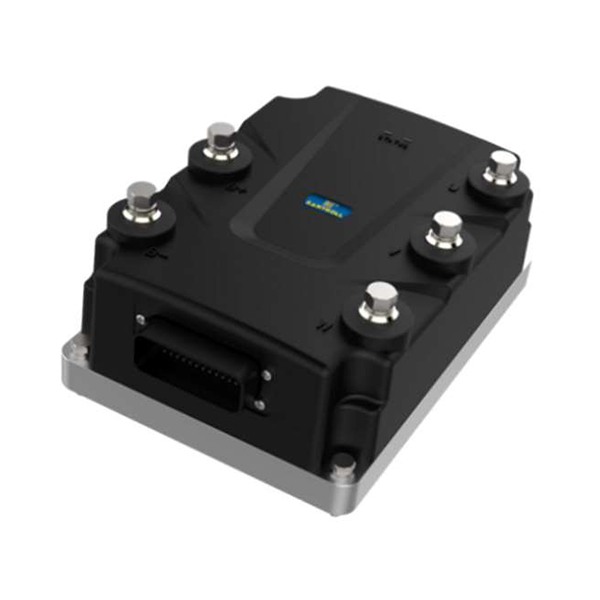
Why the Usual Fixes Fall Short
ac motor and controller setups are often treated as plug-and-play, but I’ve seen the same mistakes repeat across sites: undersized inverters, incorrect tuning, and naive starter choices that cause recurring headaches. Look, it’s simpler than you think — a poorly selected inverter and a mismatched encoder can introduce torque ripple and harmonic distortion, which then triggers thermal stress and premature bearing wear.
Where do things actually fail?
Technically speaking, classic approaches like direct-on-line or star-delta starters trade off control for simplicity. They limit soft-start finesse and make current surges worse. Then there’s the control layer: naive PWM setups without proper filtering and field-oriented control (FOC) tuning will not hold precision under variable loads. I’ve watched teams chase symptoms — replacing bearings, rewinding stators — when the real culprit was control-loop instability. That costs minutes, then hours, and morale follows.
On the user side, hidden pain points are subtle but relentless. Operators complain about vibration and noise; maintenance teams see irregular heat patterns; procurement still favours lowest upfront cost. Those choices obscure lifecycle cost. I once worked on a line where recurring alignment checks were needed monthly — we traced it to poor torque control on sudden reversals. The lesson? Control strategy, inverter sizing and thermal design matter as much as the motor’s nameplate. — funny how that works, right?
Looking Ahead: Smarter Electric Motor Solutions
What changes when we look forward is the mix of better control theory and practical connectivity. Modern electric motor solutions blend advanced inverters, real-time diagnostics and improved algorithms — sensorless vector control, predictive thermal models, and smarter power converters — to cut both energy loss and surprise downtime. We’re moving from isolated motors to systems that talk: drive-level telemetry feeding plant analytics (edge nodes and cloud), enabling predictive maintenance rather than reactive fixes.
What’s Next?
Practically, I expect three shifts. First, adoption of field-oriented control and high-resolution encoders where precision matters; second, wider use of inverter-driven soft-starts and dynamic braking to reduce mechanical shock; third, integration of simple IoT telemetry so teams see trends before failures occur. In one pilot we ran, adding a modest telemetry layer and retuning the FOC on a fleet of pumps dropped unplanned stops by nearly half — not dramatic, but meaningful for operations and confidence.
When choosing upgrades, I advise a clear scoring: measure efficiency at working load, evaluate control fidelity (how well the system holds torque under transient conditions), and check diagnostic depth (can you see bearing temperature and vibration trends?). Those three metrics separate superficial fixes from real upgrades. I say this because we have lived the aftermath of both approaches — the cheap fix and the measured investment — and the latter usually pays back faster, even if the spreadsheet disagrees at first glance.
To conclude, I believe sensible selection of drives and controllers, combined with modest instrumentation, can transform uptime and cost profiles. Be pragmatic, insist on measurable outcomes, and test in-situ rather than trusting glossy brochures. For practical sourcing and product options, I recommend assessing suppliers with transparent datasheets and after-sales support — think longevity, not just price. For more about available products and practical deployment, see Santroll.