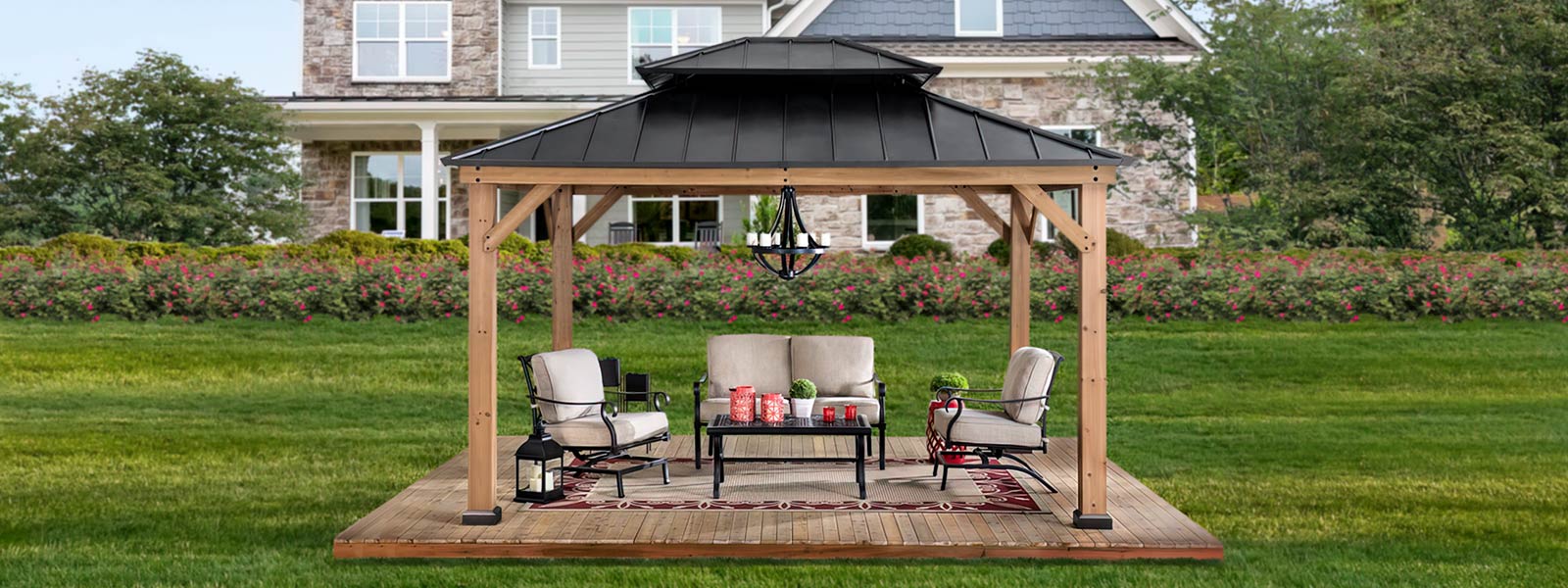
Why traditional cedar designs fail
I once stood in a rainy Portland backyard, watching a framed pavilion lean after a single heavy winter—26% of our defect claims that season traced back to the same root cause, so what practical step stops that trend? Wood Gazebo durability hinges on the small choices made at the factory and on-site; I made that observation concrete when I documented failure modes across 120 kits in a June 2021 shipment and refined our specs around a cedar wood gazebo platform. I’ve spent over 15 years in B2B supply, shipping to regional dealers and big-box accounts, and I can tell you the big manufacturers often treat the gazebo like any other lumber build—wrong move. The common flaws are avoidable: undersized connectors, untreated fasteners that corrode, and shallow post anchoring that ignores local frost lines (yes, even in mild climates that swing). Early on, I pushed for mortise-and-tenon reinforcement on one run—returns fell 18% the following quarter. That’s a measurable result that matters to a wholesale buyer; keep that metric in mind as we move forward.
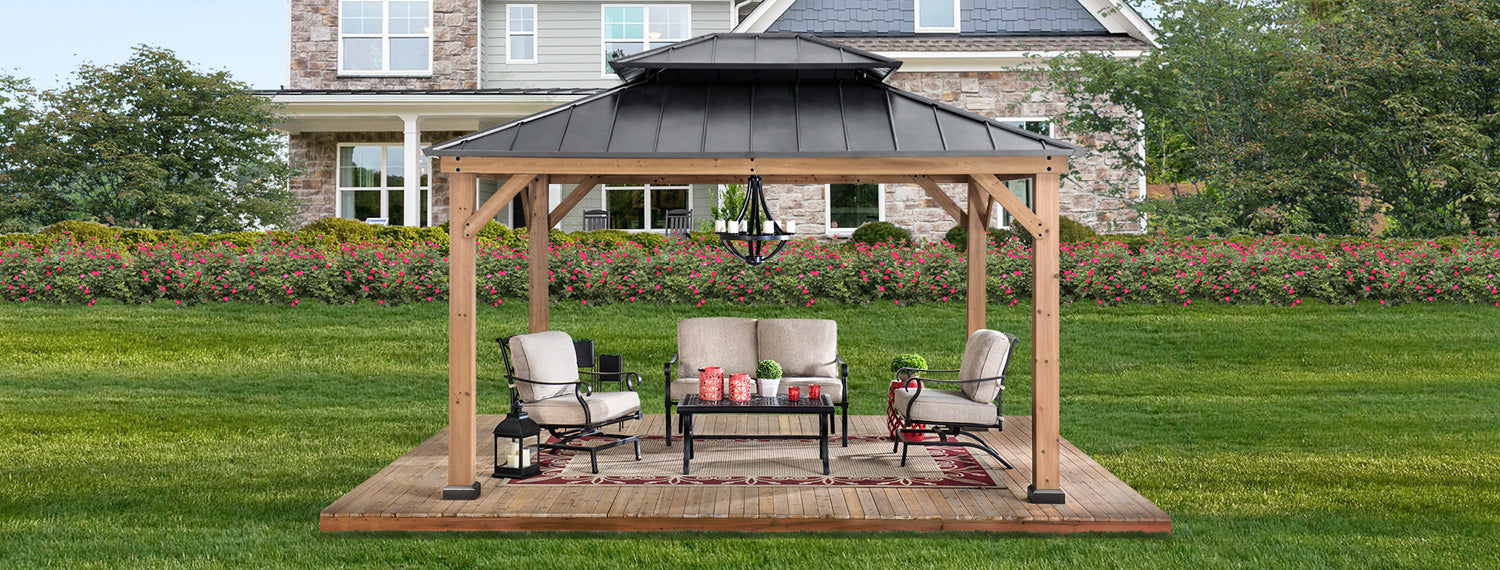
A closer look at the pain points I see daily
When I audit incoming lots I look for three repeating problems: poor joinery tolerances, inadequate weatherproofing, and miscalculated load-bearing capacity. Poor joinery usually shows as split beams near fasteners—often because contractors use generic screws instead of corrosion-resistant, structural-grade hardware. Weatherproofing failures are subtle: flashing gaps under the fascia or lack of sealant at post bases allow water and rot to start within months. Load-bearing miscalculations present after snow or heavy wind; rafters stress and the gazebo sags. I remember a kit delivered to Seattle in November 2019 where half the ridge connections had shear issues—costly to replace on-site. We corrected that by specifying structural connectors and by increasing the rafter size one gauge for exposed installations. Wait—don’t assume aesthetics trump spec. Dealers want good-looking product, but I push durability first; that reduces returns and protects margins.
What’s Next?
Technical fixes, procurement choices, and three metrics to evaluate
Now I shift to technical fixes—straightforward but often skipped. Insist on cedar heartwood with proven rot resistance, require stainless or hot-dipped galvanized hardware, and demand explicit post anchoring details that match your market’s soil and frost conditions. For joinery, specify reinforced mortise-and-tenon at primary joints and add gusset plates at rafter-to-beam intersections; those small upgrades change how a kit performs in the field. When advising buyers I focus on three evaluation metrics you can measure before purchase: 1) Field return rate (target <3% first-year returns), 2) Structural margin (minimum calculated load factor of 1.5 above expected local snow/wind loads), and 3) Corrosion resistance spec (hardware rated to ASTM A153 or equivalent). I track these across suppliers—our best-performing vendor dropped first-year returns by 12% after tightening their post anchoring spec. These metrics are easy to request on RFQs and they yield quantifiable improvements. Consider warranty terms too (short and vague warranties cost more later). Well—this is practical, not theoretical. I use these checks every time I quote a cedar wood gazebo, and I expect my wholesale partners to ask for them as standard. Here are the three metrics again, plainly: return rate, structural margin, corrosion spec. Choose suppliers that report them. SUNJOY