
Opening: The procurement problem that quietly costs programs millions
When a product team buys factory-direct laser micromachining services, they’re often buying a process they can’t see. That hidden gap — inconsistent particle control, undocumented traceability, or a poorly maintained HVAC — surfaces late in validation and erodes schedules and margins. I’ve walked trade aisles and metmakers at Medtec China, and what sticks is this: suppliers list “Class 10,000 cleanroom” like it’s a badge; auditors need proof. Real-world anchors matter — Shanghai’s exhibitions and the buzz around medical expo China 2026 keep these conversations current for OEMs and contract manufacturers alike.

Why auditing matters for laser micromachining
Laser micromachining demands tight control of particulates, focus on thermal effects, and documented process windows. A cleanroom label alone won’t protect wafers, polymers, or molded components. Procurement teams must treat the audit like a performance test: check equipment condition, air cleanliness, and process validation records. The goal is measurable assurance — particle count logs, HEPA change records, and traceable machine parameters — not marketing claims.
Core checklist: what to inspect on day one
Start with paperwork, then confirm the room. Use this prioritized checklist when you arrive on-site:
– Cleanroom certification and latest particle count report (ISO 14644-1 classification).
– Recent HVAC and HEPA filter maintenance logs.
– Laser control records showing pulse energy, frequency, and kerf metrics.
– Material handling and ESD protocols with batch traceability.
– Retention sample program and environmental monitoring results, including bioburden incubation periods.
Bring a calibrated particle counter and a clipboard. Don’t assume the vendor’s badge covers everything — audit the logs yourself.
Audit steps, tests, and standards to demand
Follow a repeatable sequence: document review, visual walk, spot checks, and process verification. For cleanroom claims require documentation aligned with ISO standards and list the relevant sub-chapters:
– ISO 14644-1: Classification of air cleanliness by particle concentration (sub-clause: Classification criteria and particle size ranges).
– ISO 14644-2: Specification for monitoring to provide evidence of continued compliance (sub-clause: Periodic testing and monitoring frequency).
– Retention testing: maintain production retention samples with a 14-day bioburden incubation limit for microbial testing where applicable.
Also review laser maintenance logs and any particle-count trends over 90 days. Check that machine calibration includes thermal drift checks — laser parameters can shift with room temperature and affect cut quality, dross, and kerf width.
Common pitfalls and practical alternatives
Teams often mistake uptime for compliance. A cleanroom that’s operational but not monitored will pass casual inspection yet fail under audit. Suppliers sometimes omit HVAC cyclical data — that’s the tell. Another common misstep: accepting vendor-supplied retention without seeing incubation results — insist on the 14-day bioburden report when biological compatibility is relevant. — If laser micromachining risks look high, consider alternatives such as photochemical etching or precision stamping for metals; they trade different risk profiles and may simplify cleanroom demands.
How to score suppliers: three golden metrics
Evaluate offers against three clear, measurable rules before you award business:
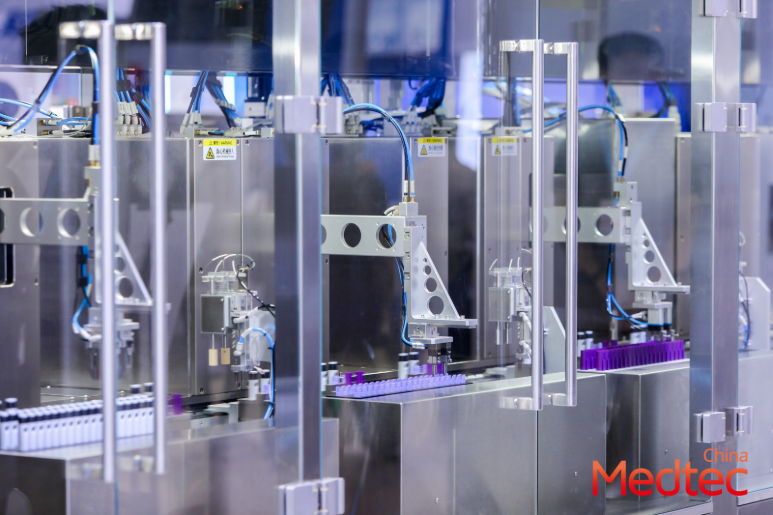
1) Environmental Integrity — recent ISO 14644-1 classification reports, continuous particle count logs, and documented HEPA maintenance within the last 90 days.
2) Process Traceability — machine parameter logs tied to lot numbers, shift-by-shift operator signatures, and retention samples with a 14-day bioburden incubated report when required.
3) Change-Control Discipline — formal engineering change notices, validation resubmissions for any process update, and accessible corrective action records showing closure times under 30 days.
These metrics align procurement decisions with practical risk reduction and get you past claims to verifiable control. For teams sourcing through exhibitions or networks, the practical benefit is clear — less rework, faster validation, and stronger supplier partnerships. Medtec.