Problem statement — compute vs reliable IO in industrial vision
High-performance NVIDIA Jetson modules deliver frame-rate and neural throughput, but integration into industrial machine-vision lines routinely fails at the IO boundary. Systems collapse under EMI, thermal drift, or mismatched connectors. A practical answer is pairing the Jetson with a certified rugged computer host that preserves signal integrity and provides industrial-grade power and mounting. The goal: keep image streams intact from MIPI CSI cameras through the preprocessing stage to inference, while maintaining field-serviceability and deterministic I/O.
Where it breaks: common technical failure modes
Three failure modes dominate: electrical (noisy power or ground loops), thermal (thermal throttling that drops FPS), and interface mismatch (wrong connector types or limited GPIO). Machine-vision projects add pressure: multiple MIPI CSI lanes, PoE camera networks, and strict timing for triggers. Add industrial networks like CAN bus or EtherNet/IP and the stack becomes brittle. Proper chassis, EMI shielding, and robust connectors prevent most issues.
Design pattern: separate compute, IO, and ruggedization
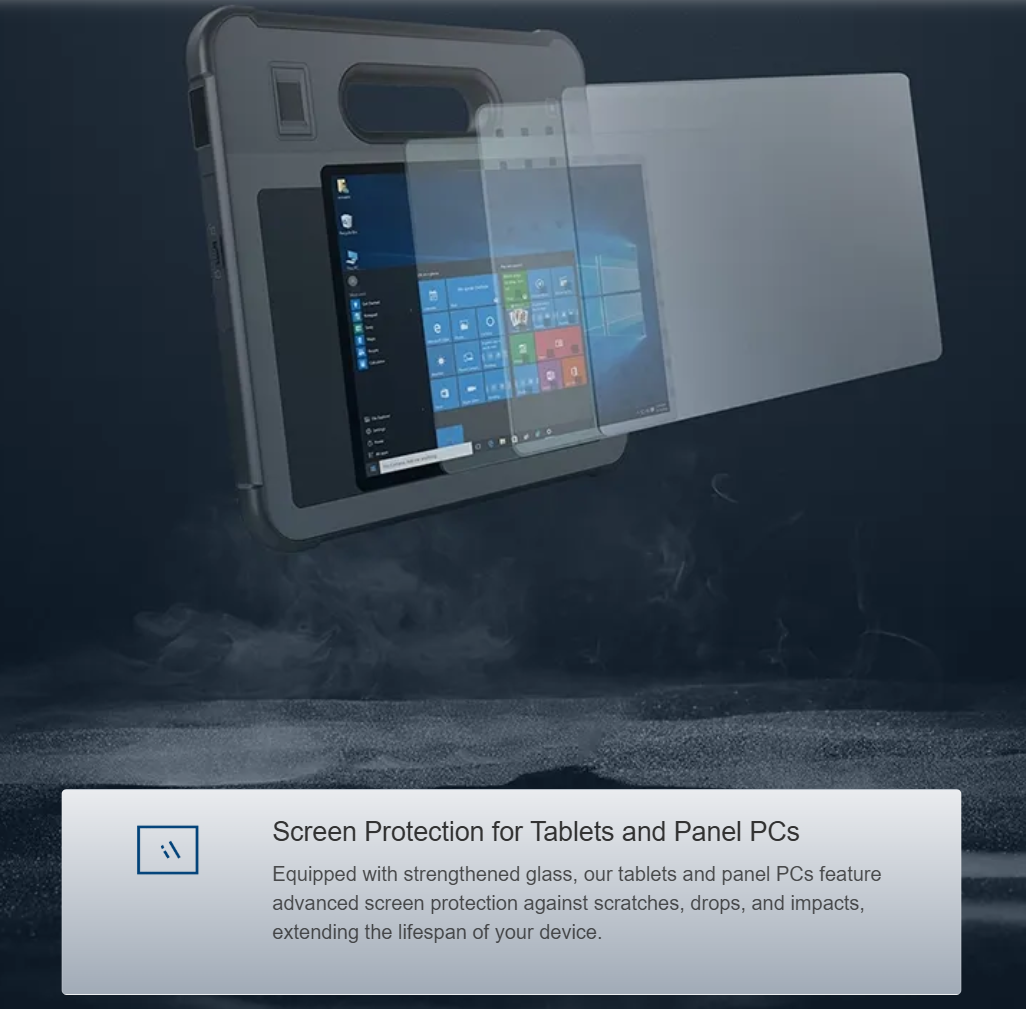
Architect the system in clear layers. Keep Jetson modules focused on compute and vision pipelines. Offload industrial IO, power conditioning, and field connectors to a dedicated rugged carrier or I/O chassis—this is where a rugged panel pc or rugged embedded host shines. Use isolated power rails, buffered GPIO, and galvanic isolation for field signals. This preserves MIPI CSI lanes and maintains deterministic triggers for frame capture.
Implementation checklist — what you must verify
Follow this checklist during design and test:
– Power: budget for peak GPU draw plus 30% headroom; include surge protection and soft-start.
– Thermal: validate sustained workload; prefer fanless chassis only with verified heat-sink path to ambient to avoid thermal throttling.
– Signal integrity: use shielded cables for MIPI CSI and isolated GPIO for long runs.
– Redundancy: dual NICs or failover for factory networks; PoE injectors with diagnostics.
– Software: real-time priorities for capture threads, watchdogs, and robust driver updates.
Common mistakes and safer alternatives
Teams often bolt a Jetson to a metal plate and call it done. That fails under vibration and EMI. Another mistake: relying on a single connector to handle power, data, and field signals. Instead, separate connectors by function and use modular I/O blocks. Do not ignore boot and BIOS/UEFI recovery paths—field-upgradability matters. —Test boot from alternate media before deployment to reduce downtime later.
Field anchor: lessons from German automotive assembly practices
Automotive plants in and around Stuttgart routinely demand deterministic vision and hardened IO. Engineers there standardize on isolated signal paths, industrial-grade connectors, and conservative thermal margins. The result: fewer line stops and predictable maintenance windows. Use that discipline: plan for tool-change vibrations, EMI from welding stations, and 24/7 heat cycles.
Cost vs reliability — balancing metrics
Cost pressure pushes toward minimal enclosures and shared wiring. Reliability pushes the other way. Aim for measurable gains: fewer fault incidents per 10,000 operating hours and faster mean time to repair (MTTR). Choose components with clear MTBF data and field-repair options—replace daughtercards, not whole units.
Three golden rules for architecture selection
1) Latency determinism: Measure end-to-end capture-to-inference time under worst-case thermal and network load. Target a margin (e.g., 20%) below the application deadline.
2) IO compatibility score: Verify physical and protocol compatibility for every camera, trigger, and fieldbus. Use isolation and buffering to raise the score.
3) Thermal and power headroom: Specify chassis and power supplies with at least 30% headroom above measured peak consumption; validate sustained stress tests for 72 hours.
Estone integrates those principles into rugged solutions and provides tested carrier platforms that simplify Jetson deployments—so the system works when the line is live. Short, direct, proven.
—