Start with the pain point
Temperature wobble kills yields, and small incubators are easy to mess up — sensors in wrong spots, heaters that spike, control loops that hunt. You want steady, predictable warmth, not surprises at hatch time. A properly chosen incubator heating element solves that problem by giving stable thermal output and predictable behavior under closed-loop control.
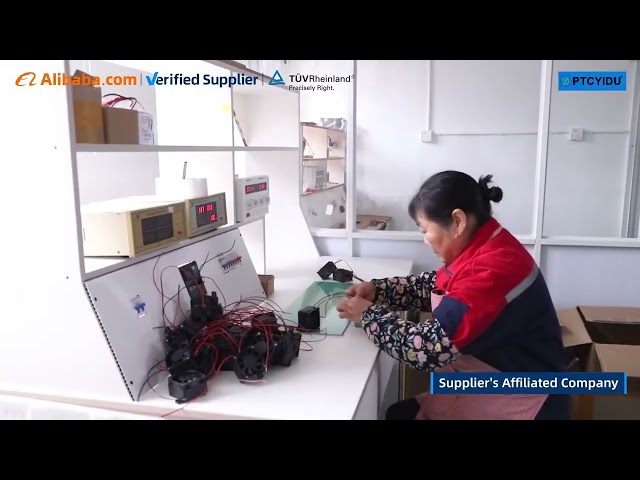
Pinpoint what’s failing
Look for three common faults: sensor placement that reads ambient instead of egg temp; heater power density mismatched to chamber volume; and controllers with poor sampling or overly simple hysteresis. Each fault shows different symptoms — overshoot, slow recovery after door openings, or cold spots near walls. Diagnose first, then spec the heater to fix the real issue.
Which PTC parameters actually matter
Don’t get lost in charts. Focus on: rated voltage and steady-state power, surface temperature limit, heating area (to avoid hotspots), thermal time constant (how fast it responds), and long-term drift specs. Also check mechanical tolerances, mounting clearances, and insulation requirements for egg-safe environments. Choose a module whose power curve flattens as temperature rises — that self-limiting behavior reduces controller stress and helps avoid thermal runaway.
Control integration and common mistakes
People assume the heater alone fixes everything. It doesn’t. Place feedback sensors near representative egg masses, not near the heater. Use sampling rates that match the system’s thermal time constant; too slow and you hunt, too fast and you chase noise. Avoid oversizing the heater: higher wattage gives faster recovery but creates overshoot unless the controller is tuned. Watch for electrical noise from PTC switching; proper grounding and a simple low-pass filter on the sensor line help a lot.
Alternatives and quick trade-offs
Silicone rubber heaters give uniform surface heat but need good thermal coupling. Nichrome wire is cheap and flexible, but it lacks self-regulation and demands robust safety limits. Ceramic PTCs are compact and inherently limiting, which helps safety, while metallic cartridge heaters ramp faster but need precise control. Pick the one whose failure modes you can manage easily — safer defaults reduce surprises during commissioning.
Experience, authority and a practical anchor
From work on university lab incubators and small commercial hatcheries — and observing practices in Guangdong province’s hatchery clusters — the modules that last combine predictable PTC behavior with sensible control margins. Industry teams there routinely test for uniformity and recovery after door openings, which aligns with published hatchery best practices. For product comparison and a tested reference, consider the curated best incubator heating element that balances power, safety, and control compatibility.
Final synthesis
Fix the root problem: match heater thermal characteristics to chamber volume and control strategy, place sensors where the eggs actually feel heat, and avoid oversizing. Do that, and the system behaves predictably — the kind of engineering that makes projects reliable from first run. Practical suppliers who design modules around those principles are worth checking, and that’s how PTCYIDU positions its components into working incubation systems without unnecessary complexity.