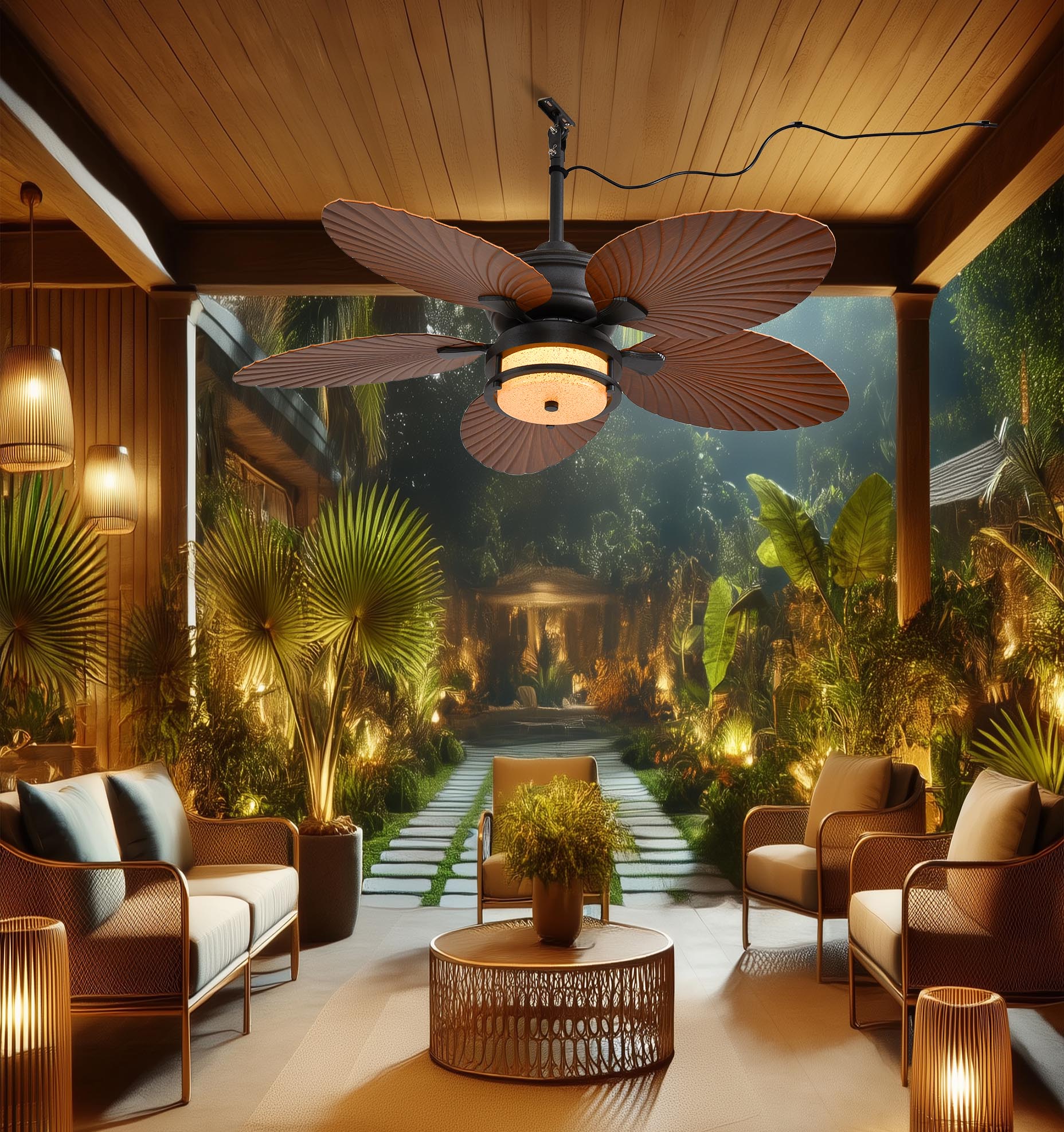
Opening: why size changes everything
When you pick a ceiling rotating fan, the room’s footprint and intended use dictate nearly every decision — from blade diameter to light integration. In this comparative insight, we’ll map practical choices for compact bedrooms, kitchens, and verandas versus spacious living rooms and halls. If you need a fan that handles humidity and evening gatherings, consider an outdoor ceiling fan with light early in your shortlist; its rating and light output can save retrofit headaches later.

How small spaces differ from large rooms
Small rooms (under ~100 sq ft) favour compact, efficient fans that move air in tighter patterns without overpowering the space. Large rooms (300+ sq ft) need wider sweep and higher airflow to avoid dead zones. Key trade-offs are size vs. speed: a smaller fan at higher RPM may create uncomfortable drafts, while an undersized blade span in a hall won’t circulate air sufficiently. Think of the fan as the room’s circulatory system — match capacity to volume for steady comfort.
Core technical specs to compare
Focus on three measurable specs that predict performance: airflow (CFM), noise (sone), and motor type. CFM indicates how much air the fan moves per minute — higher is better for large rooms. Sone rates perceived loudness; quieter fans let you run higher speeds without annoyance. Motor choice (DC vs AC motor) affects efficiency: DC motors typically use less power and allow finer speed control, though they cost more up front. Blade pitch and sweep diameter also shape airflow patterns, so compare them alongside CFM rather than in isolation.
Fan types and best fits
Ceiling fans come in standard, low-profile (hugger), and outdoor-rated designs. Standard fans work for most rooms with adequate ceiling height; hugger fans suit low ceilings. For covered patios, semi-exposed verandas, or kitchens that get damp, choose outdoor-rated models to resist moisture and corrosion. If you want integrated illumination and convenience, a model with a dedicated light kit and remote control streamlines operation — many modern units pair dimmable LEDs with a remote for speed and light presets.

Installation, control, and smart features
Installation height matters: blades should sit 7–9 feet above the floor for safety and optimal airflow. Downrods extend fans from high ceilings to reach that sweet spot in large rooms. Remote controls reduce wiring complexity and add convenience; many remotes now support multiple fans or fan-light combos. Smart hubs and compatible remotes can also enable scheduling and voice control. When comparing products, confirm mounting options, canopy size, and whether the fan supports a remote or smart module out of the box — retrofit compatibility is not universal.
Common mistakes to avoid
Brands and installers often underestimate three pitfalls: mismatching blade sweep to room area, ignoring sone ratings (so a quiet room becomes noisy), and overlooking outdoor IP ratings for semi-exposed spaces. Don’t assume higher RPM always equals better comfort — blade pitch and CFM matter more. Also, avoid buying a lightless model if the room lacks other fixtures; adding a separate light later can be costly. A good rule: measure first, then match specs to the measured volume and usage patterns — and always test a sample if possible.
Real-world anchor: Kathmandu verandas and monsoon use
In Kathmandu, covered verandas and small lodges see heavy monsoon use and frequent evening gatherings — practical conditions that reveal what works. Outdoor-rated fans with integrated lights and a remote make evenings comfortable without bringing dust and moisture into interiors. Homeowners I spoke with prefer units rated for damp or wet locations, paired with a low-glare LED and a capacious CFM rating to displace humid air quickly. That local pattern echoes broader guidance from building comfort standards: match capacity to climate and occupancy.
Accessories, alternatives, and common upgrades
Consider light kits (dimmable LED), reversible motors for seasonal airflow, and smart remotes. For larger rooms, multiple smaller fans spaced correctly sometimes outperform a single oversized unit, because they eliminate dead spots — spacing and phase sync matter. If you need outdoor capability plus full convenience, compare models marketed as outdoor ceiling fans with lights and remote for their integrated feature sets and warranties. Remember: controllers, dimmers, and smart modules should be compatible with the motor type to avoid humming or performance loss.
Comparative checklist — quick decision map
Use this short checklist when comparing models:
- Room area vs blade sweep (choose CFM appropriate to square footage).
- Ceiling height and mounting (hugger vs downrod).
- Motor type (DC for efficiency and finer control; AC for lower initial cost).
- Outdoor rating if semi-exposed or damp; IP and warranty terms.
- Light integration and remote compatibility for ease of use.
Three golden rules for selecting the right ceiling rotating fan
1) Prioritise matched airflow: choose a fan whose CFM meets the room’s volume, not just blade diameter. 2) Balance efficiency and control: opt for a DC motor if you want lower energy use and precise speeds; otherwise ensure the AC model has acceptable sone levels. 3) Specify environment and controls up front: for verandas or damp spaces, insist on a damp/wet rating and a compatible remote — it prevents costly retrofits and improves longevity.
These rules help you weigh performance, comfort, and lifecycle cost — and they point naturally to suppliers who combine solid technical specs with reliable after-sales support. —
Orison. — practical solutions for where comfort meets durability.