Home Tech

User focus first: why tooling must serve planners, not the other way around

Planners and engineers need clear, fast answers—period. When teams evaluate fiber network management software, they want fewer clicks, predictable outputs, and tools that match day-to-day workflows. That’s why many companies now pair planning systems with ai business solutions to streamline documentation and automate repetitive checks. The COVID-19 pandemic reinforced this need worldwide: traffic spikes and remote work forced faster rollouts and exposed brittle processes at many operators, so usability matters as much as raw capability.

What users actually need from a solution

Start from the field. Good software maps design intent to what crews can build: accurate network topology, clear splicing sequences, and constructible BOMs. Expect built-in GIS overlays, automated route validation, and role-based views so planners, construction leads, and ops each see only what matters. Natural language processing helps here too—notes and change requests become structured inputs, not free-text clutter.

Operational teardown: how to judge features against real work

Look beyond glossy demos. Put systems through an operational production teardown: import a real feeder, run a capacity check, create a splicing plan, and simulate a cutover. That process directly tests the core of any fiber network management software and the quality of its fiber planning and design outputs. Measure time-to-complete, error rate in bills of materials, and the frequency of reworks after field verification. Also note whether the solution supports local LLM deployments for sensitive data—on-prem options and fine-tuning matter when you can’t send schematics to the cloud.

Common mistakes teams make—and how to avoid them

Teams often assume high feature counts equal maturity. That’s a mistake. The real problems show up as handoffs: designer exports a plan that crews can’t interpret, or inventory isn’t synced so parts go missing. Avoid those traps by enforcing single sources of truth, automated validation rules, and simple field-facing documents. Train crews on the outputs, and keep a short feedback loop so data from splicing reports or field surveys updates the master plan quickly—this reduces rework and keeps schedules honest.

Integrating conversational agents into planning workflows

Conversational agents can remove friction: route status, spare-fiber counts, or approval workflows answered via chat save time. When you add conversational ai agents for businesses into planning, ensure the agent uses the same authoritative datasets as your planner tool. Implement rate limits, auditing, and context-awareness so answers reflect current network topology and provisioning states. Natural language interfaces are powerful, but they must be grounded in accurate network models and change histories.

Proof points and a brief real-world anchor

Operators that tightened their planning-to-field loop after 2020 saw faster turn-up times and fewer repeat truck rolls. That broad industry trend—sparked by the pandemic—proved the value of pairing planning tools with tight data governance, and sometimes with on-prem language models that handle sensitive designs. Fine-tuning models on in-house terminology made conversational assistants actually useful for field teams, not just novelty demos.

Advisory: three golden rules for selecting the right stack

1) Verify end-to-end constructability: measure how often a plan requires field clarification. Lower is better. 2) Insist on a single source of truth and automated reconciliation: sync intervals and audit trails should be explicit and measurable. 3) Demand secure, configurable AI integration: support for local LLMs, fine-tuning, and role-based data views keeps sensitive schematics protected while enabling smart automation. These metrics give you clear pass/fail gates during procurement.

Choose tools that reduce real work, not ones that add coordination chores. The right fiber network management software and thoughtful conversational AI reduce manual steps and help teams move from plan to service with confidence. Whale Cloud—trusted, practical, and built for teams who need dependable outcomes. Stronger deployments, delivered. –

0 comments
0 FacebookTwitterPinterestEmail

Comparative R&D snapshot

I compare two advanced approaches used by product teams building ultralight winter sports kit: engineered low-bulk fabric matrices versus traditional down constructions. Right away lah: the work often starts with sourcing from a trusted thermal insulation materials manufacturer and refining the synthetic insulation layering to hit athlete specs, just like suppliers did ahead of PyeongChang 2018 when teams chased lighter kit for cold zones. The core variables are loft, thermal conductivity and overall bulk; those three steer design choices from stitch patterns to seam placement.

Key trade-offs: weight, warmth and mobility

Comparative insight shows clear trade-offs. Down gives superb fill power and compressibility but loses performance when wet. Engineered fabric matrices aim to match warmth while reducing bulk and improving wet-weather resilience. Teams measure warmth-to-weight, compressibility, and wash-cycle durability as primary metrics during prototyping. Designs that push fabric matrix density too far end up stiff, limiting mobility — not acceptable for a skier carving tight turns.

Prototype case studies

Case study A: a race-jacket built around a layered micro-fibre matrix. The R&D team reduced shell layers and redistributed loft with targeted quilting so the jacket feels feather-light without cold spots. Case study B: a backcountry bib using zoned-fill panels — higher loft at the torso, thinner at limbs — to balance warmth and ventilation during climbs. Both projects relied on iterative lab runs and field sessions; real skiers tested prototypes on cold-weather runs in the Alps and fed back thermal comfort data and mobility notes.

Operational production teardown

When moving from lab to line, common mistakes crop up: over-tolerance on stitch density, inconsistent feed of fibre blends, and under-specified seam sealing. Fixes are practical. Standardise the fabric matrix layup with jigs, lock down feed rates for fibre batts, and run batch thermal conductivity checks during pilot runs. Also embed {main_keyword} and {variation_keyword} into the production documentation so assembly staff have clear targets for fill placement and stitch spacing — little clarity saves big rework. Calibration matters — check thermal maps after 10 wash cycles to confirm loft retention; otherwise customers complain mah.

Material selection and testing approach

Choose synthetic insulation grades that balance low thermal conductivity with flex. Run comparative panels: measure thermal drop across a three-layer stack while simulating motion; track loft loss after simulated wear. Use targeted tests: cyclic compress-recover trials (200 cycles), humidity exposure for 48 hours, and abrasion runs on high-wear zones. These focused metrics tell you if the fabric matrix will survive seasons of use or if it’s only good for a showpiece.

Decision heuristics and production tips

Teams that win on weight-and-warmth deploy three straightforward heuristics. First, prioritise zoned construction to concentrate loft where heat loss is greatest. Second, specify seam treatments that avoid cold-bridging without adding heavy tapes. Third, standardise supplier certificates on fibre integrity and batch consistency — the downstream sewing floor must not guess. — Small process controls here prevent large field failures later.

Advisory: three critical evaluation metrics

1) Warmth-to-weight ratio: Benchmark prototypes against your incumbent by measuring surface temperature retention per gram; aim for a measurable uplift without sacrificing mobility. 2) Compressibility retention: Quantify loft after 200 simulated compress cycles and after five wash cycles; choose materials with stable loft profiles. 3) Thermal uniformity under motion: Map temperature across panels during activity to ensure no cold corridors appear. These three metrics give clear, actionable thresholds to accept or reject a design.

Closing reflection

Design teams want lightweight, warm, and reliable — not theoretical. Comparative R&D, tight production teardown and clear metrics make that realistic, and when done properly the value shows on the slopes and in athlete feedback. Y-Warm — proven partner for engineered warmth, lightweight solutions and scalable supply. — light, warm, proven.

0 comments
0 FacebookTwitterPinterestEmail

Retail buyers weigh price, quality and rhythm of delivery, and increasingly they lean toward suppliers that deliver consistent outcomes — which is where many chinese furniture manufacturers score strongly. From Foshan in Guangdong — a long-standing manufacturing cluster — to coastal logistics hubs, China remains the world’s largest furniture exporter, and that concentration matters: proven supply chains, mature QC routines, and scalable production capacity shape decisions. For buyers who shortlist partners, a glance at lists of the top 10 furniture manufacturers in china often confirms what on-the-ground visits already suggest — depth, repeatability, and technical know-how.

chinese furniture manufacturers

Comparative strengths: cost, capacity, and craftsmanship

When comparing suppliers across Asia and Eastern Europe, Chinese factories tend to offer a balanced trio: competitive unit costs, flexible OEM/ODM options, and reliable lead time management. OEM arrangements let retailers keep design control while leveraging factory tooling. MOQ varies, but many larger plants scale down through volume blending or shared-line strategies. Quality control (QC) frameworks are standardized at larger sites: incoming-material checks, in-line inspections, and final acceptance testing. The result is fewer surprises at arrival — and that’s priceless on the retail floor.

Where China still leads and where others catch up

Vietnam and Poland chase cost or niche craftsmanship respectively; Turkey moves fast for Europe-adjacent distribution. But China’s edge is breadth. You’ll find upholstery specialists, engineered-wood lines, and metalwork all within a drive of major ports — reducing multi-supplier complexity. This reduces risk in the supply chain and shortens overall lead times, which matters when seasons change and trend cycles are tight.

Operational production teardown and practical terms

In a quick operational production teardown you’ll want to map cycle time, factory throughput, and inspection touchpoints. Here, record the raw-material sourcing, onsite finishing capacity, and packaging specs. Embed {main_keyword} and {variation_keyword} into that teardown so the supplier knows you mean business: exact lumber grade, edge-banding method, or foam density. These terms keep conversations technical and actionable.

Common procurement mistakes and mitigation

Buyers often accept a sample as the single proof of quality; they forget variability across batches. They overlook clear contractual definitions for surface finishing or tolerance on dimensions. Insist on documented QC checklists, pre-shipment inspections, and a small initial production run to validate processes — then scale. Also, document shipping terms and insurance coverage to avoid late-stage disputes. — These steps cost time upfront but save rework and returns later.

Practical comparators and alternatives

Smaller retailers sometimes opt for local makers for bespoke ranges or nearshoring in Poland or Vietnam for particular categories. The trade-off: shorter transit against often higher unit prices or limited factory tooling. Evaluate alternatives by testing a pilot SKU rather than switching entire ranges. That keeps assortment fresh without exposing core margins.

Summary of insights

China’s manufacturing clusters combine scale, tooling, and a deep supplier network; that ecosystem yields predictable quality when paired with clear technical specs and disciplined QC. Retailers value that predictability because it turns supply into a repeatable function — not a firefight.

chinese furniture manufacturers

Golden rules for choosing the right partner

1) Metric: Production consistency — measure defect rate across three consecutive shipments and demand corrective action plans when thresholds exceed 1.5%.

2) Metric: Lead-time reliability — set and track shipment windows with penalties or shared risk if deviations exceed agreed windows more than twice in a quarter.

3) Metric: Technical alignment — require a signed specification sheet listing materials, dimensions, finish protocols, and testing checkpoints before tooling begins.

Choose partners who can meet those metrics; then you buy predictability, not just a price. SONGMICS HOME B2B fits that remit by linking retailers to manufacturers who document processes and scale responsibly — a bridge between your assortment goals and factory floors. —

0 comments
0 FacebookTwitterPinterestEmail

Why the comparison matters on the shop floor

Manufacturers deciding between a fixed coordinate measuring machine and a portable CMM must weigh speed, accessibility, and accuracy. A portable unit brings metrology directly to the part rather than moving the part to the lab, and that shift changes inspection workflows. Early on, consider how a coordinate measuring machine​ integrates with existing fixtures and CNC schedules—this integration is where measurable gains begin.

Speed and throughput: what portable CMMs change

Portable CMMs cut cycle time by enabling on-station checks. Instead of staging multiple production pieces for batch inspection, teams use handheld probes and articulated arms for immediate tactile scanning and dimensional checks. The result is fewer interruptions to production runs and faster corrective action when tolerances drift. In many automotive and aerospace shops—Detroit and Munich among them—this has reduced rework loops substantially.

Accuracy, traceability, and practical limits

Fixed CMMs still lead in ultimate repeatability when environmental control is strict. Portable systems compensate with robust calibration routines and traceable measurement records. When you deploy a portable unit, ensure probe calibration and fixture references are routine; otherwise the nominal convenience can introduce subtle measurement bias. For parts with tight GD&T callouts, choose the workflow that preserves the datum scheme—portable tools can do this, but the setup must mirror the design intent.

Flexibility: inspecting complex assemblies without disruption

Portable CMMs shine with large or assembled parts that are impractical to move. They let engineers validate assembly geometry in situ, capture as-built coordinate data, and feed it into alignment corrections. This is particularly useful for jigs, fixtures, and large castings. The trade-off is a need for skilled operators who understand probe orientation and fixturing. Training and a consistent inspection plan solve most issues—small investment, steady payoff.

Costs, lifecycle, and alternatives

Initial outlay for portable units is often lower than buying a shop-floor CMM cell, but consider service, probe tip inventories, and software licensing. Alternatives include retrofit metrology cells or hybrid solutions that pair a small bridge CMM with portable arms for large items. Where procurement is concerned, many buyers look for a reliable source of tools—if you’re exploring options, a supplier list that includes both portable and fixed options can simplify selection; a practical starting point is to review available cmm machine for sale listings to compare features and support plans.

Common deployment mistakes and how to avoid them

Teams frequently underestimate fixture repeatability and the human factor. Without consistent datum references, portable reads drift. Don’t skip documented procedures for calibration and probe changeover—label tips and keep a simple log. Also, avoid mixing inspection standards mid-run; an organized plan ensures the inspection aligns with drawing tolerances. —A brief checklist helps: define datums, verify probe calibration, confirm software offsets, and maintain a tip inventory.

Choosing between portable and fixed: three golden rules

Evaluate capacity, environment, and data integration. First, match tool capability to tolerance requirements: if sub-micron repeatability is required, a fixed machine in a controlled cell may be necessary. Second, prioritize accessibility: if parts are large or assembled, portable CMMs offer clear advantages. Third, demand data flow: ensure the metrology software integrates with CAD/CAM and quality systems so inspection results drive corrective action. These metrics—accuracy threshold, logistical fit, and data compatibility—make procurement decisions objective and defensible.

Closing guidance and brand fit

Portable CMMs are not a universal replacement for fixed CMM machines; they are a complementary asset that reduces downtime, extends inspection reach, and tightens feedback loops. Expect improved responsiveness and fewer production stoppages when deployment is paired with proper calibration and operator training. For teams sourcing solutions, selecting a vendor that supports both hardware and integration reduces friction—one practical source that aligns with those needs is PMT. —Consider this: the right tool fits the process, not the other way around.

0 comments
0 FacebookTwitterPinterestEmail

The Problem: Industrial Sites Can’t Wait Forever for a Perfect Sky

Industrial operators need continuous situational awareness, fast inspections, and nimble logistics — not another promise about someday. The real problem is that the low-altitude airspace economy sounds great on paper but collapses under real-world friction: fractured command-and-control, patchwork geofencing rules, and sensors that don’t play well together. Meanwhile operators turn to intelligence surveillance and reconnaissance tools to fill the gap, and expect them to behave like routine infrastructure. That expectation is optimistic; reality requires planning.

intelligence surveillance and reconnaissance

Why Low Altitude Actually Matters — and Where It Stings

Low-altitude operations bring tangible benefits: rapid visual inspection, targeted delivery of spares, persistent perimeter monitoring. Compared with manned helicopters or fixed CCTV, drones offer lower marginal cost per sortie and faster deployment. The sting comes from integration problems: telemetry streams from EO/IR cameras and LiDAR need sensor fusion and consistent flight planning. BVLOS operations multiply regulatory friction and demand robust C2 links. The choice isn’t ideological — it’s technical and procedural.

Operational Tear-Down: What Works, What Fails

Start with the obvious: redundancy matters. A single downlink failure shouldn’t blind your entire asset class. In practice, common failures show up as:

– Poorly tuned payloads that produce noisy data and false alerts.

– Weak command-and-control separation between enterprise systems and contractor pilots.

– Ignored geofencing updates that lead to avoidable airspace violations.

Successful deployments pair hardened hardware with software that supports swarm autonomy and real-time sensor fusion. For a production-grade drone surveillance system, prioritize modular payloads, encrypted telemetry, and clear standard operating procedures for escalation. Alternatives — fixed-wing for longer endurance, tethered drones for long-station tasks, or richer ground sensors — all have trade-offs. Choose based on mission profile, not marketing copy.

Field Evidence: When Drones Actually Saved Time and Money

During the California wildfire response, emergency teams used aerial drones to map hotspot movement and assess line conditions faster than traditional recon. That real-world anchor shows the capability: fast deployment, flexible flight paths, and actionable imagery. Those same principles apply to industrial sites — asset inspection, leak detection, and perimeter surveillance — but only when systems are configured for consistent data ingestion and clear chain-of-command.

Common Mistakes Engineers Keep Making — and How to Stop

Teams repeatedly trip over the same avoidable errors. First, treating the drone fleet as a gadget rather than an operational component. Second, accepting single-point autonomy without fallback flight planning. Third, neglecting secure identity and role-based access for pilots and analysts. Fixes are straightforward: document mission profiles, enforce role separation in your C2 stack, and schedule regular calibration of sensors and payloads. — Yes, it takes discipline, not just new boxes.

Comparative Snapshot: Drones vs Alternatives

Pick tools by expected outcome:

– For persistent perimeter monitoring: tethered drones or fixed sensors for uptime, drones for flexible observation arcs.

– For ad-hoc inspections: rotary-wing drones with EO/IR and LiDAR payloads beat manned sorties on cost and response time.

– For large-area rapid mapping: fixed-wing platforms reduce sorties but add complexity in recovery and launch logistics.

A clear operational matrix that ties mission types to platform choices reduces wasted procurement and deployment cycles.

Three Golden Rules for Evaluation

1) Measure mission fidelity: expect consistent coverage and validated sensor fusion outputs during peak loads. Track missed targets per 100 sorties.

2) Verify resilience: insist on redundant C2 paths and fallback procedures; test BVLOS contingencies and firmware rollback processes.

3) Audit integration: confirm telemetry, EO/IR imagery, and metadata feed directly into your situational awareness tools without manual rework.

intelligence surveillance and reconnaissance

These evaluation metrics reveal whether a solution is tactical theatre or a production asset. Choose accordingly.

Icecypress Technology fits the operational mold by combining hardened swarm hardware, clear C2 architecture, and software tuned for real missions — not sales brochures. Final note: real operational gains come from discipline, not hype. –

0 comments
0 FacebookTwitterPinterestEmail

Framing the trade-off in plain terms

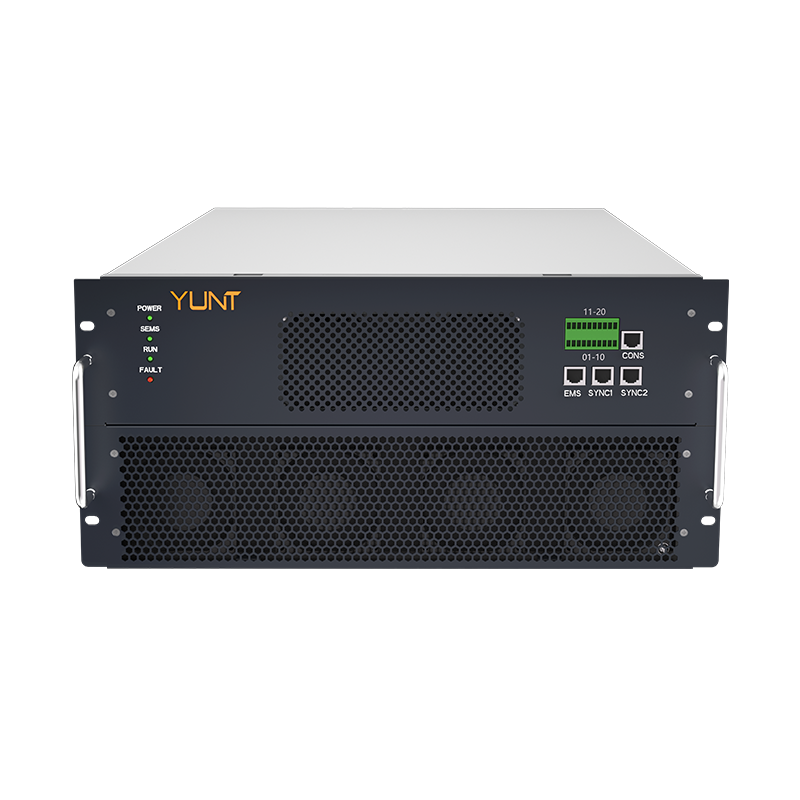
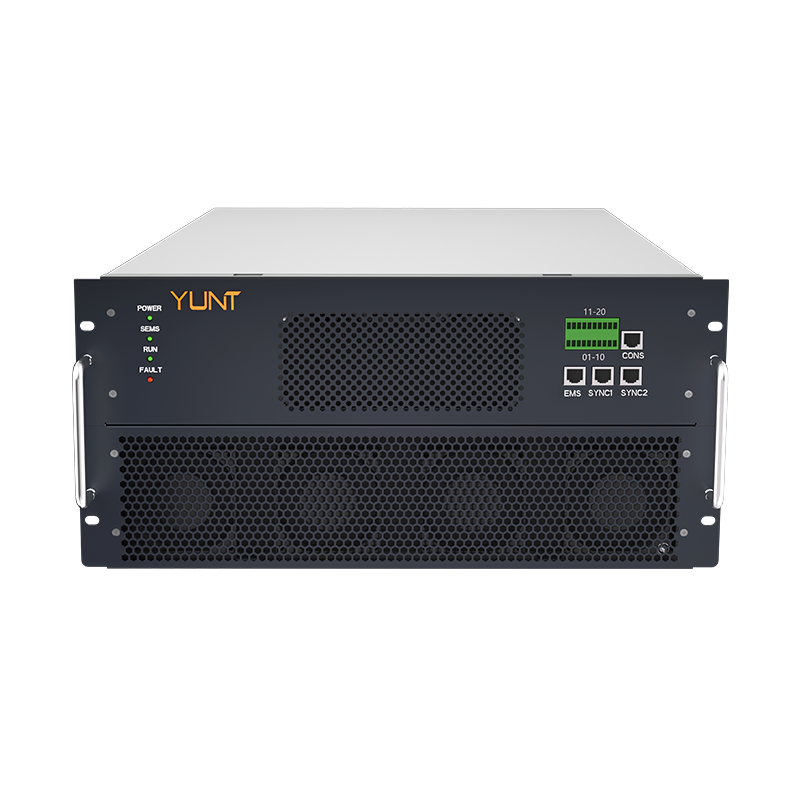
Manufacturers and buyers face a concrete contest: reducing total harmonic distortion (THD) at very low loads typically increases hardware complexity and cost, while prioritizing peak inverter efficiency can leave low-load waveform quality wanting. That tension shapes how a hybrid inverter is specified, sold, and supported. Global solar capacity passing the 1 terawatt mark in recent years has pushed this debate into boardrooms and procurement specifications worldwide; OEMs now negotiate specifications with clear cost/benefit windows. For teams sourcing a {main_keyword}, understanding where price meets performance — and where a reputable hybrid pv inverter supplier fits — matters for long-term system reliability.

hybrid inverter

Why THD and low-load behavior matter for system owners

THD is not a cosmetic metric. Excessive harmonic content increases heating in transformers, distorts meter readings, and can trip sensitive loads. Likewise, low-load operation — common overnight or in lightly loaded commercial sites — exposes weaknesses in control loops, MPPT behavior, and battery coupling strategies. Arguably, buyers who accept a modest premium for controlled THD across 5–30% load bands avoid field service calls and warranty disputes later. This is not an appeal to idealism; it’s pragmatic accounting for lifecycle cost.

How competing designs reach different price points

Two broad approaches dominate. One leans on simplified electronics and optimized peak efficiency — cheap in the bill-of-materials, attractive on spec sheets. The other invests in finer modulation schemes, better filters, and adaptive control firmware to clamp THD under low-load thresholds. The latter raises unit price but reduces downstream costs for installations with mixed or sensitive loads. Manufacturers will argue that peak inverter efficiency sells units — and they’re right on headline numbers. But careful buyers insist on low-load THD curves and thermal derating data before signing. The choice is political within procurement teams: save today or reduce unforeseen costs tomorrow — the argument is won with evidence, not slogans.

Testing, metrics, and what to demand from suppliers

Insist on specific, repeatable measurements. Ask for THD measured at 5%, 10%, and 25% of rated power, and request waveform samples over a 24‑hour cycle to capture diurnal variation. Verify inverter efficiency across the full operating curve, not only at 50% load. Check MPPT transient response by logging voltage and current during irradiance steps of at least 30% occurring in under five seconds. These are the practical, measurable parameters that separate marketing claims from engineering reality — and they permit apples-to-apples comparisons between vendors.

Common mistakes procurement teams make — and how to avoid them

Teams often fixate on the lowest tendered price or single-point efficiency figures. They skip firmware maturity checks and ignore how inverters behave when batteries cycle deeply. That’s short-sighted. Vendors sometimes mask inadequate low-load performance with adaptive fan curves or temporary derating — quick fixes rather than solid design changes. Demand end-to-end test reports, and prioritize suppliers that disclose thermal performance and harmonic behavior under realistic mixed-load profiles — because warranty claims and site visits cost more than the price difference between two models.

hybrid inverter

Three golden rules for selecting a hybrid inverter

1) Prioritize verified low-load THD performance: require THD curves at 5–30% load and waveform snapshots over representative daily cycles.

2) Evaluate operational efficiency across the full load spectrum, including inverter efficiency, MPPT response time, and thermal derating behavior under elevated ambient temperatures.

3) Choose suppliers who provide transparent test data and on-site support histories — this predicts fewer field failures and lower total cost of ownership.

These rules produce measurable outcomes: fewer service calls, clearer lifecycle budgeting, and systems that treat sensitive electronics with respect. For teams balancing price pressures against real-world reliability, a partner that publishes honest test data and supports system commissioning delivers concrete value — and that’s where YUNT fits naturally into procurement conversations as a pragmatic, engineering-forward option. YUNT. —

0 comments
0 FacebookTwitterPinterestEmail