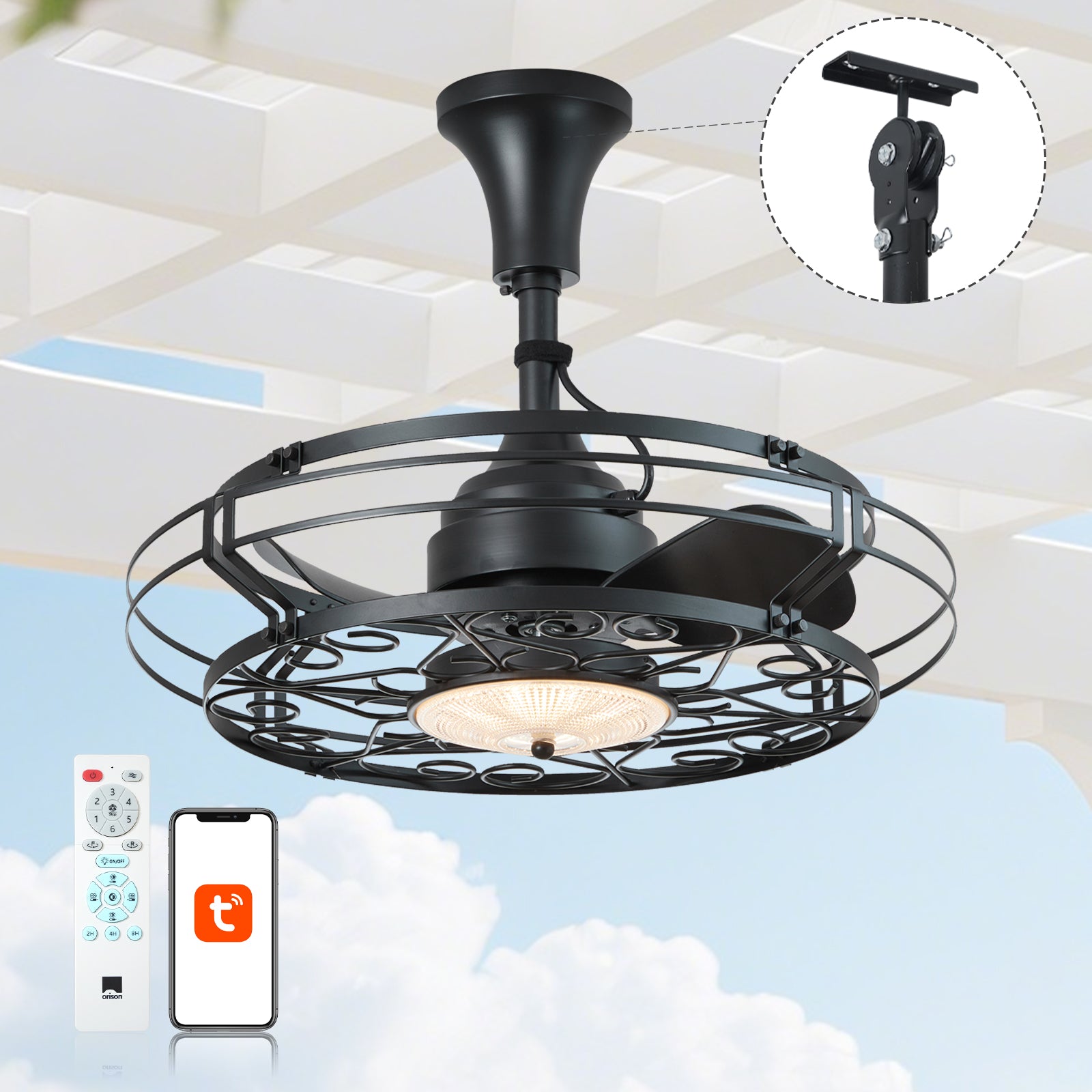
Opening: why quiet matters outdoors
When you are deciding on an exterior ceiling fan with an integrated light, the question is not merely which model looks best but which one creates the right ambience without becoming a noisy distraction. This user-centric guide focuses on practical choices — from airflow and IP rating to installation nuances — so you can pick an outdoor patio ceiling fans that performs reliably and quietly in real-life conditions. The emphasis is on outcomes you will notice: lower vibration, consistent motor efficiency, and a light that complements rather than overpowers conversation.

What users typically mean by “quiet” — and what to measure
“Quiet” is surprisingly specific. For most households it equates to low perceptible hum at conversational distances and minimal blade whoosh at typical terrace speeds. Three practical metrics you should look for are: decibel rating at operating speeds, rated CFM for the fan (so you know how much air it moves), and motor efficiency or design (DC motors tend to be quieter than older AC types). Do look at the IP rating too — a fan intended for an exposed pergola should have an appropriate ingress protection level so the motor and light remain sound after rain or spray.
Noise-reduction technologies that matter to everyday users
Manufacturers use several approaches to reduce sound. Balanced blades and tuned blade pitch minimise aerodynamic noise; precision bearings and rubberised mounting gaskets reduce mechanical vibration; and brushless DC motors with PWM controllers often run smoother and quieter across speeds. None of these is a silver bullet on its own — you want a combination that suits the installation. For example, a high-CFM fan with poor balance will still hum, whereas a modest CFM fan with excellent motor isolation can feel far more pleasant.
Installation variables that often spoil performance
Almost as important as the hardware are the choices made at install. Poor bracing in the joist, long downrods that are not properly stabilised, and loose light fittings can amplify otherwise negligible noise. A common mistake is assuming a fan’s silence in a showroom translates directly to your deck — it does not. Ensure the mounting point is rigid, use anti-vibration mounts where appropriate, and have the electrician check the luminaire’s fitting for rattles before finalising the installation. These small things reduce resonance and keep the fan’s sound profile predictable.
Weatherproofing and longevity: the wet-rated consideration
If your fan is exposed to rain or coastal spray, opt for a certified wet-rated ceiling fan with light. Wet-rated models use corrosion-resistant finishes and sealed housings to protect electronics and bearings; this preserves motor efficiency and noise performance over time. Real-world events such as the 2017 Atlantic hurricane season led many coastal homeowners to prioritise wet-rated fixtures, because durability after severe weather proved decisive for long-term peace of mind. Choosing a correctly rated unit is therefore both a safety and acoustic decision.
Comparing product choices — practical trade-offs
When you compare models, consider these trade-offs:
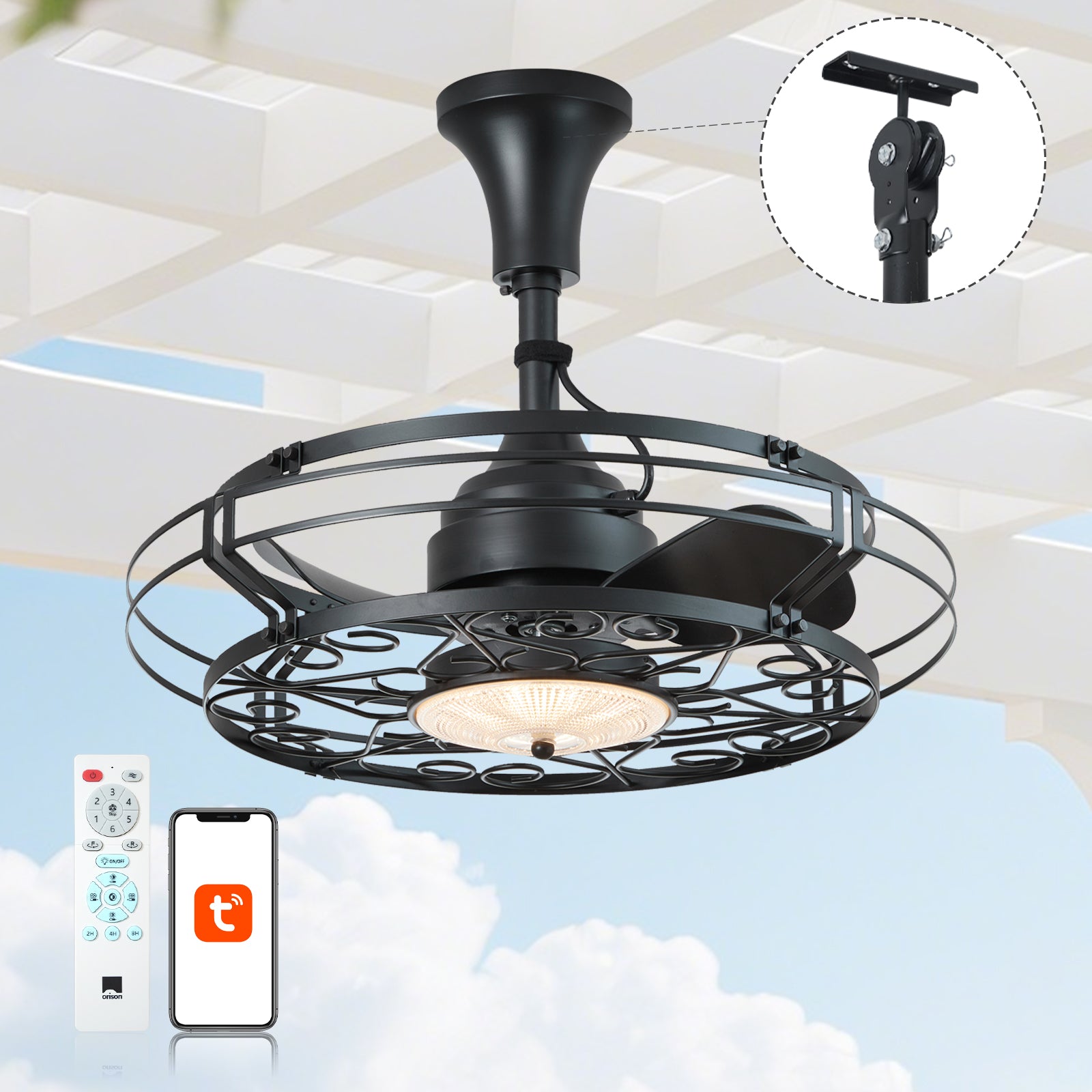
- High-CFM, larger blades: superior cooling at low RPM but requires careful balancing to avoid whoosh.
- Compact, high-RPM fans: useful for smaller spaces but can create more tonal noise if blade design is poor.
- Integrated LED modules: efficient and low-heat, yet quality varies — a poorly designed driver can introduce audible whine.
Choose based on your priority: raw airflow, absolute quiet, or integrated lighting performance. And remember that a wet-rated ceiling fan with lights may cost a touch more up-front but will usually save you maintenance headaches and preserve acoustic comfort.
Common mistakes users make — and how to avoid them
There are predictable errors that spoil satisfaction. First, mismatching blade span to space: too-large blades in a small pavilion cause turbulence; too-small blades in a wide pergola mean running at high speed and greater noise. Second, neglecting the light driver: LED drivers vary, and some introduce a faint hum at lower dim levels. Third, overlooking warranty terms for motors subjected to outdoor conditions. A simple remedy is to insist on in-situ testing before leaving the site — run the fan across all speed settings and listen from typical seating positions. — It saves time and frustration later.
Alternatives and complementary solutions
If a ceiling fan alone will not meet your noise or coverage needs, consider pairing it with strategically placed overhead heaters or oscillating tower fans for spot cooling; these can allow lower, quieter fan speeds. For very exposed sites, canopy or semi-enclosed designs with baffle attachments reduce wind buffeting and maintain lower sound levels. When choosing accessories, check compatibility with the fan’s motor type and mounting system to avoid voiding warranty or degrading performance.
Summary of practical steps before purchase
Before you order: measure the space, decide on target CFM and acceptable decibel range, confirm IP rating for outdoor exposure, and request a technical sheet showing motor type and warranty. Where possible obtain a short in-home demo or a sample of decibel readings at distance. These steps convert marketing claims into verifiable expectations.
Three golden rules for selecting the right exterior ceiling fan with light
1) Match form to function: select blade span and CFM appropriate to the covered area rather than choosing aesthetic first. 2) Prioritise sealed, wet-rated designs for exposed installations — they keep motor efficiency and acoustic performance stable. 3) Insist on documented noise and warranty specifications, and verify them in-situ with a brief operational test.
These rules steer you toward long-term satisfaction and help you avoid common buyer’s remorse. In practice, a quiet and durable solution is often the best value.
Orison — a natural fit when you want an outdoor fan that balances quiet performance with weather resilience. —