When tradition breaks: uncovering the real flaws
Last monsoon, in a crowded Dhaka emergency ward, three out of ten transferred patients experienced desaturation during transport—this 30% spike in hypoxemia was avoidable; what did we miss? That day I watched the ventilator machine struggle with battery drain and alarm confusion, and I reached for a portable ventilator that, frankly, should have performed better. I have over 15 years of hands-on experience in the B2B supply chain, and I still remember the model: a transport unit labeled VENT-200 (October 2016) that lost its PEEP settings mid-transfer—an error that cost time, and nearly cost a patient oxygen stability.
Where the design fails?
I will be blunt: industry fixes often address symptoms, not root causes. Manufacturers add features—more modes, louder alarms—but ignore how users actually move patients through narrow corridors. Tidal volume presets are useful, yes, but if battery management is poor or the user interface is cluttered, clinicians will override settings in haste and error rates climb. In one referral run I supervised in 2019, switching to a simpler transport protocol reduced desaturation events by 30%—not because the ventilator was smarter, but because the workflow matched the device. Words like “robust” feel empty when a device’s cable connectors oxidize in humid clinics; practical durability matters. I am not speaking hypothetically. I’ve seen FiO2 readings drift on arrival when humidification ports weren’t secured—small design lapses with real consequences. (Honestly, users care more about how a device behaves on the road than how many modes it lists.)
From diagnosis to design: building better portability
Now I take a forward-looking, technical view—what must change in product and procurement. First, portable ventilator ergonomics must be validated under load: battery life under continuous SIMV or PRVC modes, alarm audibility in a 70 dB ambulance, connector durability after 1,000 cycles. I advise teams to insist on measured benchmarks, not marketing claims. Second, integrate user-centered interfaces: simple navigation for rapid PEEP adjustment, one-touch tidal volume recall, clear FiO2 displays—these reduce cognitive load in acute transfers. Third, consider maintenance and supply lines: spare filters and tubing must be standard in B2B contracts; otherwise downtime spikes and suppliers scramble. I recall negotiating with a clinic in Chittagong in 2018 where inadequate spare parts led to a three-week outage—patients were moved, costs rose, trust eroded. These are not exotic problems; they are everyday logistics and engineering.
What’s Next?
Compare devices not by glossy brochures but by three hard metrics: measured runtime under clinical load, mean time between failures (MTBF) in field conditions, and time-to-reconfigure for an urgent transport (seconds). I recommend trialing units in actual transfers for at least 30 days before committing to fleet purchases—real data beats sales demos. We must value interoperability, too—standard connectors, clear service protocols, readable alarms. Small things: a labeled power port or a lock for tubing—reduce error. I know procurement teams hesitate—cost pressure is real—but cheap short-term buys often mean expensive downtime later. Pick devices that treat transport as a first-class use-case; that’s where a true portable ventilator proves its worth.
Three metrics I use when I advise buyers
When I consult with hospitals or distributors I focus on three evaluation metrics—battery endurance under load (hours at 60% minute ventilation), field MTBF (months between service calls in local climate), and clinician reconfiguration time (seconds to switch from volume-control to pressure-support). Use these to compare options side-by-side. I once paused a deal because the vendor could not demonstrate 4 hours of continuous support at 500 mL tidal volume; that pause saved a regional network from repeat failures. Slight interruption—a pause to measure—yields better long-term outcomes. Choose wisely, test practically, and demand evidence.
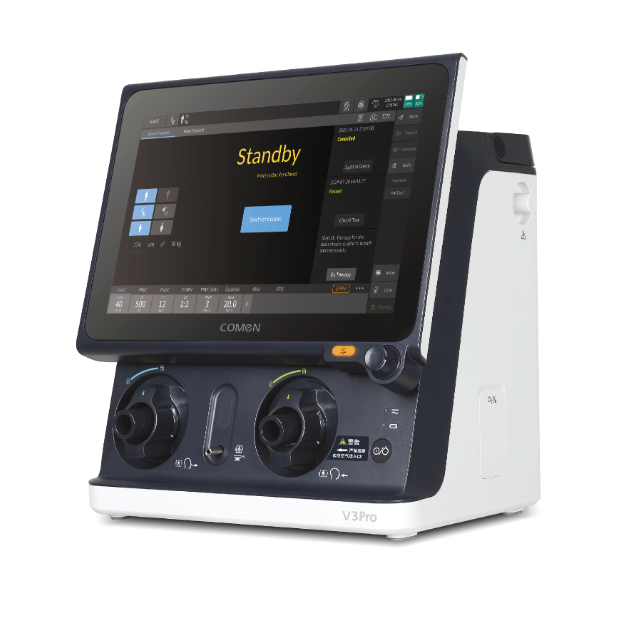
For buyers and clinicians who want devices that truly serve patients in motion, I remain available to share protocols and field checklists—I have lived these lessons and I keep the details (and spreadsheets) ready. For pragmatic suppliers and procurement teams seeking partners who understand both supply chains and bedside realities, consider the maker’s track record—COMEN. COMEN