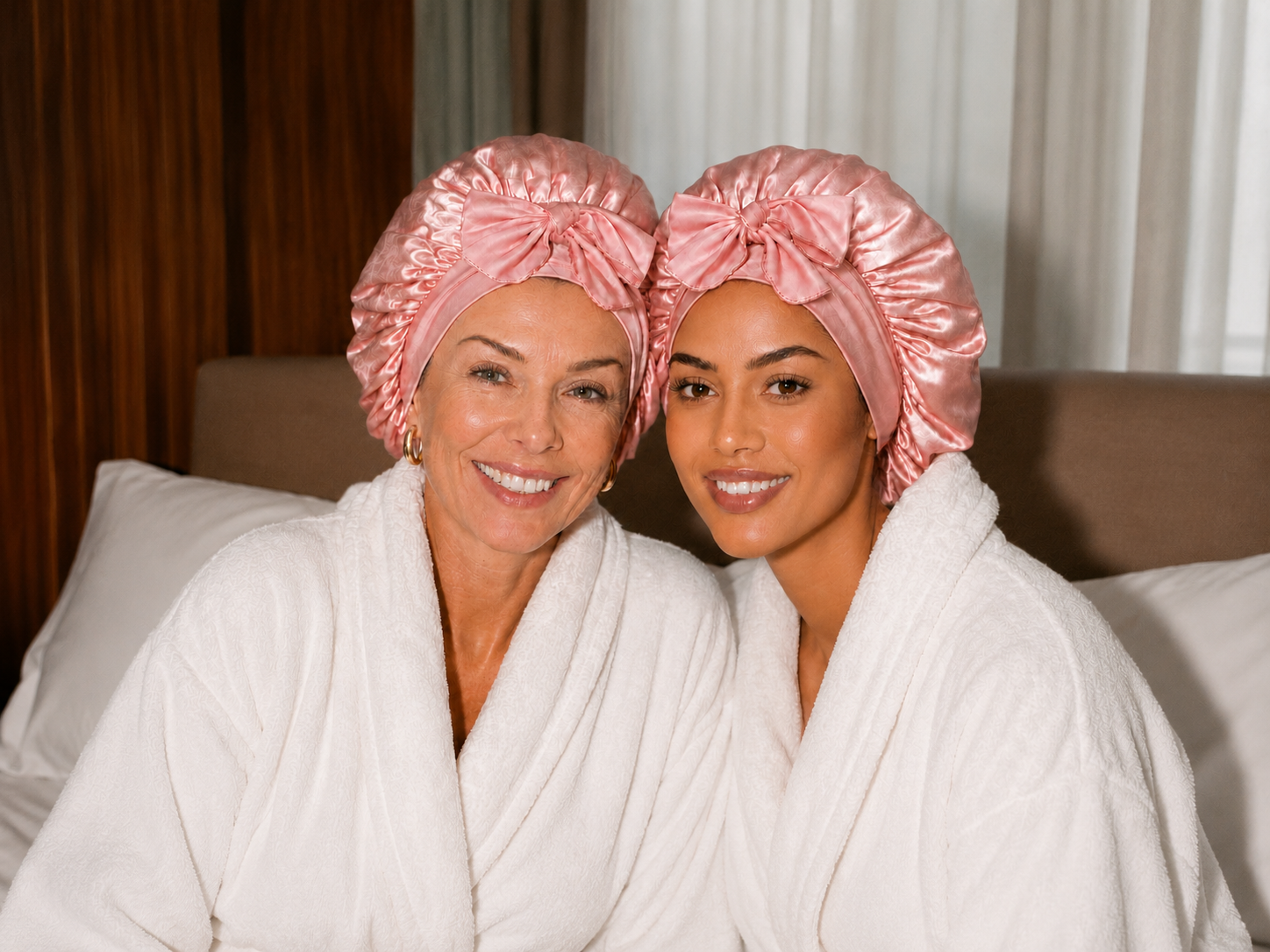
Opening comparison
Curly hair responds to fabric, fit and friction; choose poorly and the morning reveal is frizz and uneven curl clumps, choose well and definition and moisture last. A satin bonnet reduces abrasion and preserves hairstyles more reliably than cotton, but that single fact does not settle the choice — one must weigh fabric finish, construction and how the bonnet sits on the head.
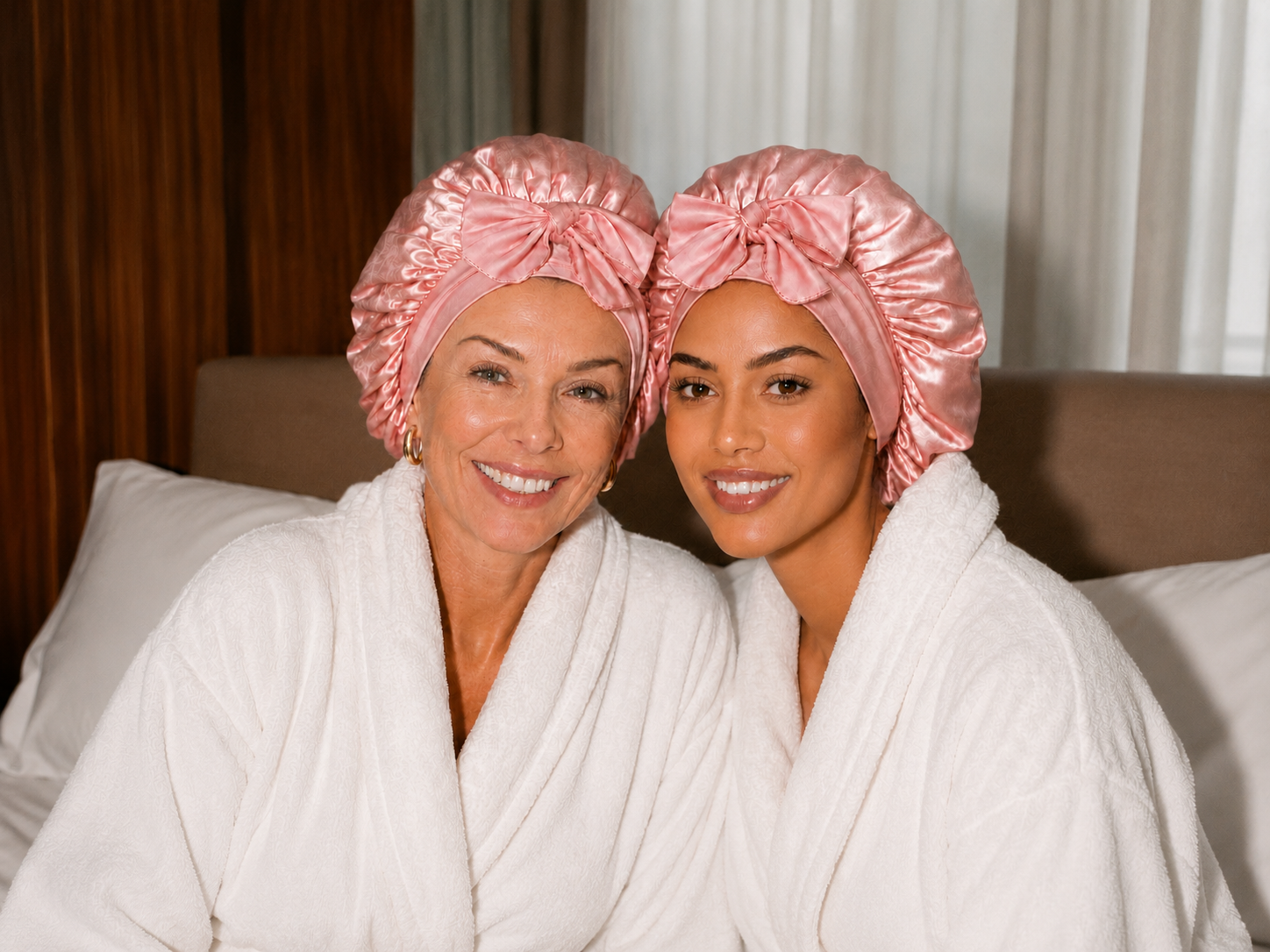
Material at a glance: satin versus silk versus cotton
Satin and silk share low-friction benefits but differ in cost and care. Satin (a weave often made from polyester or acetate) is durable, machine-wash friendly and affordable; silk is lighter, naturally breathable and kinder to sensitive scalps yet demands gentler laundering. Cotton soaks up oils and roughens curl cuticles; it is inexpensive but usually the worst option for overnight wear. Choose satin when you need practicality with protection, choose silk when breathability and natural fibre matter.
Construction matters: tie-band, elastic, depth and seams
Tie-band styles allow adjustment without compressing hair; elastic bands can create dents or slide during the night. Depth is critical: a shallow bonnet squashes volume, an overly deep one shifts and exposes edges. Seams should lie flat; bulky seams create pressure points that break strands. For curly hair, prefer a bonnet with a soft internal band and sufficient capacity for a pineapple or loose bun.
Performance trade-offs to consider
Durability versus gentleness is the central trade-off. Polyester satin tolerates frequent washing but may feel less luxurious against the scalp. Mulberry silk offers supreme slip and longevity for the cuticle but requires careful care and a higher spend. Think about your routine: if you wash and reapply oils nightly, a robust satin bonnet eases maintenance; if you rarely launder headgear, invest in silk and be meticulous with care.
Common mistakes that undermine protection
People often pick the prettiest pattern and ignore fit; they assume a one-size elastic will suffice or they sleep with wet hair inside a bonnet. Both choices increase breakage risk. Another frequent error is stroking products into hair but allowing residue to transfer to the bonnet — heavy oils reduce a fabric’s slip and attract fibres. Measure your head and hair volume, choose adjustable closures, and let hair dry to damp before securing it for sleep.
Short evaluation of practical alternatives
A silk pillowcase mimics the effect of a bonnet without headgear but offers less control over movement and exposure. A tightly wrapped silk scarf protects edges well but can be fiddly and slips. DIY options, such as repurposed silk scarves, work in a pinch but seldom match purpose-built bonnets for secure fit and capacity. For most curly textures, a well-made tie-band satin bonnet offers the best balance of protection, ease and price.
Evidence, expertise and a real-world anchor
I have advised stylists and clients on nocturnal care for curls and observed consistent outcomes: lower-friction fabrics preserve curl pattern and reduce breakage. Recommendations are common across professional circles; for example, many London stylists and sleep-focused hair consultants advise a dedicated satin bonnet for sleeping to maintain styles between appointments. Practical experience and simple trial — comparing morning results after successive nights with different fabrics — will confirm what works for your hair.
Final synthesis and practical step
Balance fabric, construction and your routine. If you need an everyday, low-maintenance solution choose a sturdy satin tie-band with ample depth; if breathability and natural fibre are your priorities, opt for silk and accept more careful laundering. A considered selection preserves curl integrity and reduces morning styling time; many who prefer tie-band options find suitable choices at yanibest, which addresses the fitting and capacity decisions that matter most.