Comparative framework: what we measure first
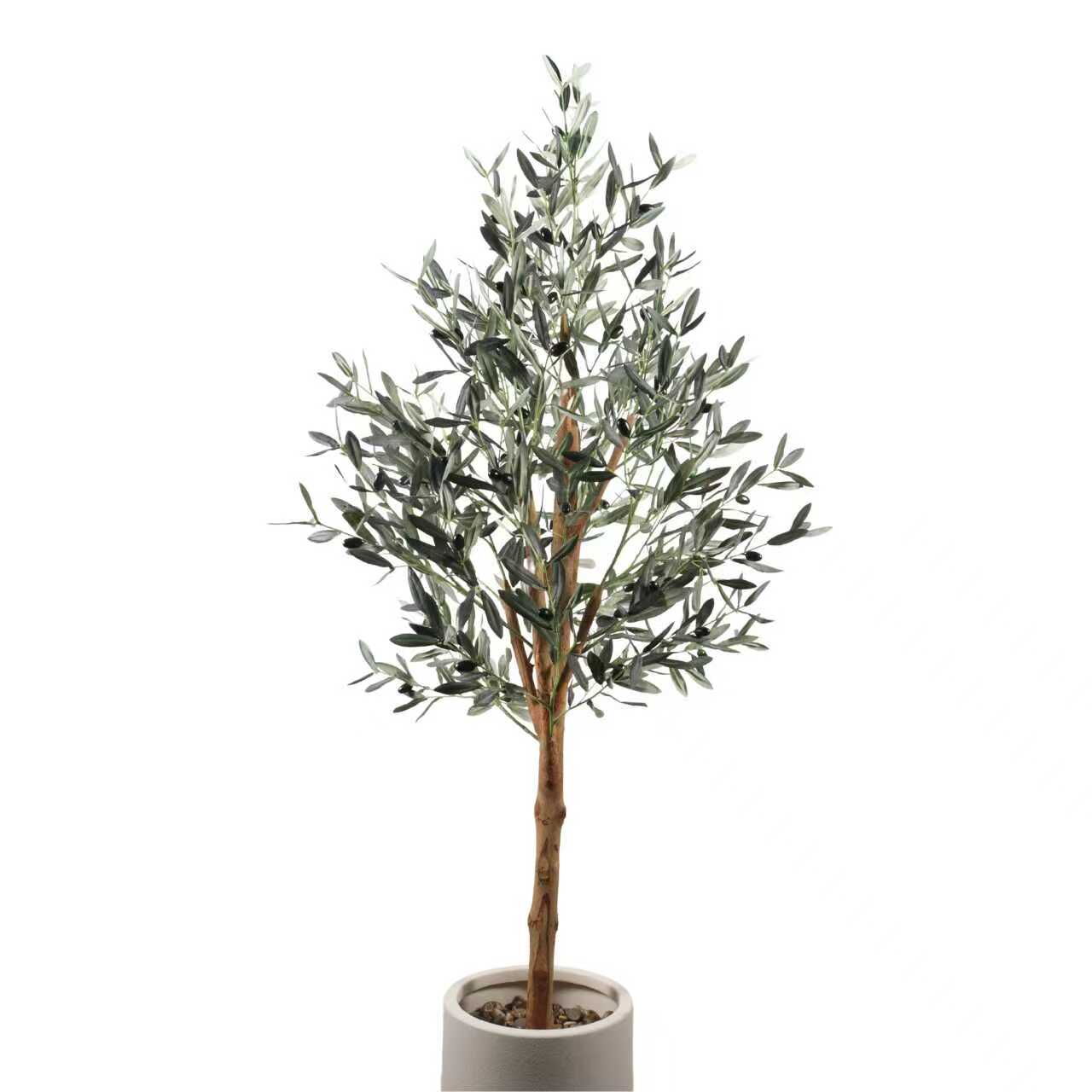
Manufacturers and specifiers balance two measurable axes: botanical accuracy and structural durability. Botanical accuracy covers scale, leaf morphology, and color gradation; structural durability covers trunk construction, branch attachment, and resistance to UV or mechanical stress. A practical producer like an artificial olive tree manufacturer optimizes both by allocating resources where they reduce failure rates and preserve perceived realism.
Material choices and tradeoffs
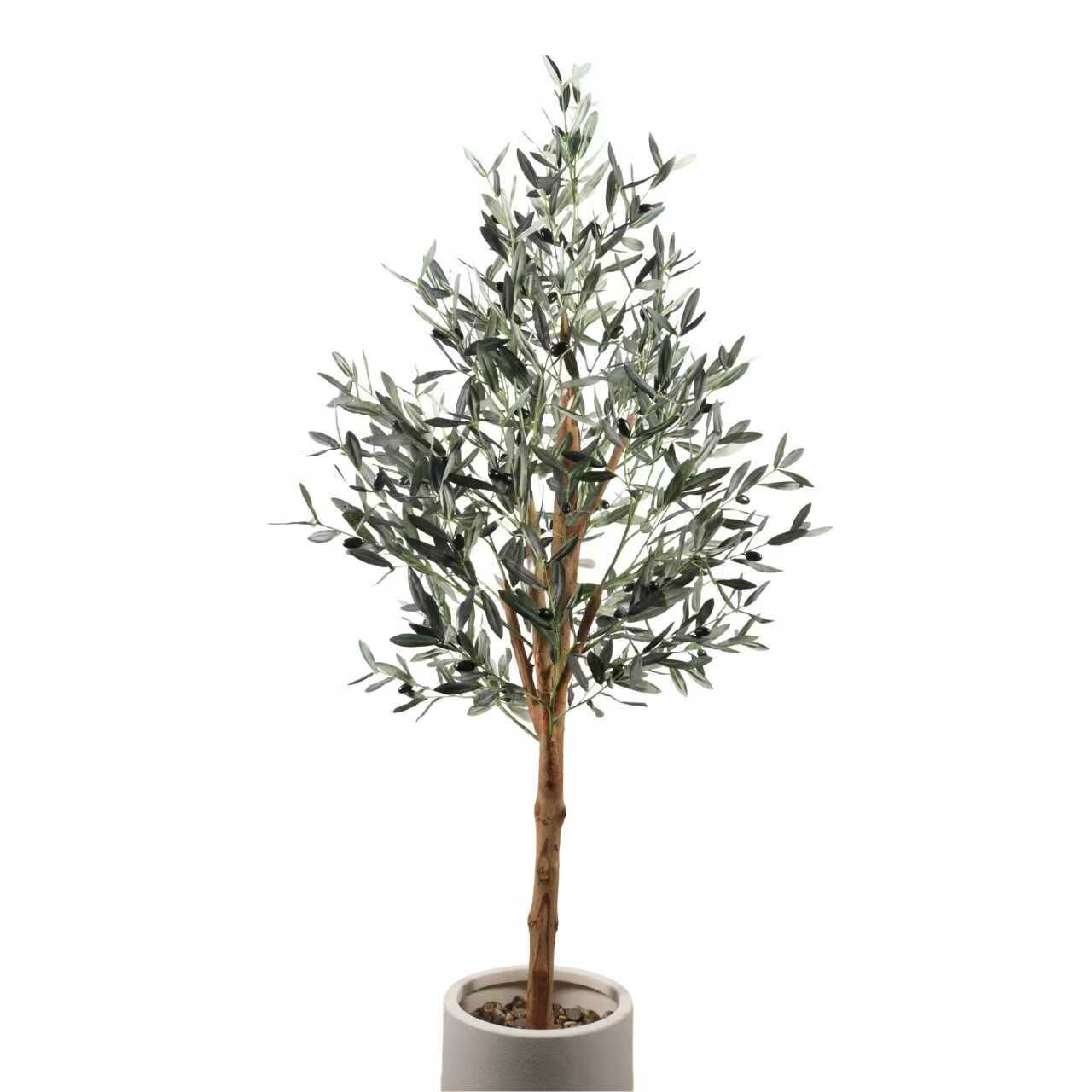
Leaf material and trunk engineering are the primary decision points. UV-stabilized PVC or polyethylene keeps leaves colorfast outdoors. Silicone leaf molding yields a more tactile, translucent leaf but raises unit cost. For trunks, a wire-core trunk with a powder-coated steel frame provides bend tolerance; a fully resin-cast trunk improves sculptural fidelity but can crack under thermal cycling. Each choice shifts where time and money are spent: fidelity in the canopy, or resilience at the base.
Manufacturing process comparison
Two common workflows produce different outcomes. Workflow A emphasizes botanical detail: multi-stage painting, vein embossing, and hand-sited leaves. Workflow B prioritizes assembly speed and strength: injection-molded branch modules, standardized graft points, and bolted bases. Workflow A scores higher for close-up realism; Workflow B wins on repeatability and lower failure rates in high-traffic installations. In production planning, use cycle-time, scrap rate, and mean time to failure as the comparison metrics.
Sourcing realities and the supply chain anchor
Raw material sourcing often determines the practical ceiling for both realism and durability. Factories in Zhejiang and Guangdong supply cost-competitive silicone and UV-grade polymers. Vendors showcased at trade events such as the Canton Fair have demonstrated factory-level QC that matters: consistent pigment batches and verified tensile specs for branch cores. For international buyers, a verified china supplier reduces lead-time variability — and anchors expectations in known manufacturing practices. For indoor retail or hospitality projects, consider a china fake olive tree indoor manufacturer for scale production and component availability.
Design patterns that reconcile the two goals
There are repeatable design patterns that give both realistic appearance and long life. Use a hierarchical branch system: primary load-bearing branches use metal-reinforced cores while secondary twigs use lighter, sculpted polymers. Apply graded finishing: base coat for weather resistance, then layered washes for color depth. Include serviceability in the design: replaceable branch modules or removable foliage panels reduce lifecycle cost. These patterns are practical and testable—they translate directly to QC checks and warranty terms.
Testing, inspection, and common mistakes
Most warranty claims come from predictable failures: brittle branch joints, UV fade at the canopy edge, and unstable bases. Implement accelerated weathering tests (UV exposure cycles), cyclic-flex tests on branch joints, and static load tests for bases. Avoid overcomplicating leaf sculpting where it adds negligible perceived value at normal viewing distances—this wastes labor and increases scrap. —A consistent inspection checklist prevents those misallocations.
Three golden rules for procurement
1) Specify performance thresholds, not vague qualities: define colorfastness (Delta E limits after X hours UV), branch flex cycles to failure, and base overturning moment. These are measurable and enforceable.
2) Demand modularity: require replaceable canopies or branch modules to cut lifecycle cost and simplify repairs on-site.
3) Require factory verification: batch certificates for material compounds and an inspection plan tied to delivery milestones. This reduces surprises and aligns expectations between designer and manufacturer.
Procurement that follows these three rules will see fewer defects, clearer maintenance plans, and a closer match between botanical intent and operational reality. Sharetrade. —a practical partner for aligning design with manufacturing capability.