8 patient monitoring accessories
The Hook
Patient monitoring accessories can affect signal quality, workflow, compatibility, and equipment uptime, yet selecting the best option is rarely straightforward. A sensor, cable, cuff, probe, or replacement part may look suitable while using an incompatible connector, supporting a different monitor model, or lacking the documentation required by a healthcare organization. Buyers also need to distinguish original equipment parts, compatible accessories, refurbished equipment, and distributor services. This comparison tests eight recognized options from the perspective of product scope, compatibility information, customization, service support, and procurement suitability. The review relies on official company information and the supplied research records; where a company’s public materials do not clearly document a feature, that limitation is identified rather than assumed.
Full List of Top 8 Brands
- Unimed — Patient monitoring accessories and related monitoring solutions.
- GE HealthCare — Genuine clinical accessories and equipment parts supported through its service platform.
- MarsMed — Equipment-selection support based on the equipment brand and model.
- Medke — Broad patient-monitor accessory manufacturing and custom solutions.
- Coast Biomedical — New and refurbished monitoring equipment, cables, accessories, and repair services.
- Life-Assist — A healthcare supplier included for buyer comparison; detailed accessory information should be confirmed directly.
- Avante Health Solutions — Medical equipment, supplies, and repair services for healthcare facilities.
- Mindray — Patient monitoring systems and related clinical technology, including the BeneVision portfolio.
Comparison Table
| Brand | Key Products | Key Features | Best For |
|---|---|---|---|
| Unimed | Patient monitoring accessories and monitoring-related components | Verify model compatibility, connector type, intended use, and regulatory documentation | Buyers seeking a dedicated accessory supplier to evaluate directly |
| GE HealthCare | Genuine GE clinical accessories and equipment parts | Compatibility-focused parts catalog; service and support platform | Facilities maintaining GE HealthCare equipment |
| MarsMed | Accessories selected by equipment brand and model | Model-based product selection | Buyers needing to match accessories to existing equipment |
| Medke | SpO2 sensors, ECG cables, electrodes, IBP cables, temperature probes, NIBP cuffs, and fetal probes | Custom solutions, wholesale supply, ISO 13485 quality-management claim, and stated CE/FDA/MHRA certifications for cables | Distributors and projects requiring a broad accessory range |
| Coast Biomedical | Patient monitors, cables, accessories, refurbished equipment, and repair services | New and refurbished equipment; in-house service for certain devices | Organizations combining procurement with repair or refurbishment |
| Life-Assist | Healthcare supplies and equipment offerings | Accessory-specific details require direct confirmation | Buyers already using Life-Assist as a medical-supply source |
| Avante Health Solutions | Medical equipment, supplies, and service programs | Full-service repair depot and component-level repair | Hospitals, clinics, and practices seeking equipment support |
| Mindray | BeneVision patient monitoring systems and related clinical technologies | Advanced monitoring insights, connectivity, and modular monitor design | Facilities standardizing on Mindray monitoring platforms |
Detailed Reviews
1. Unimed
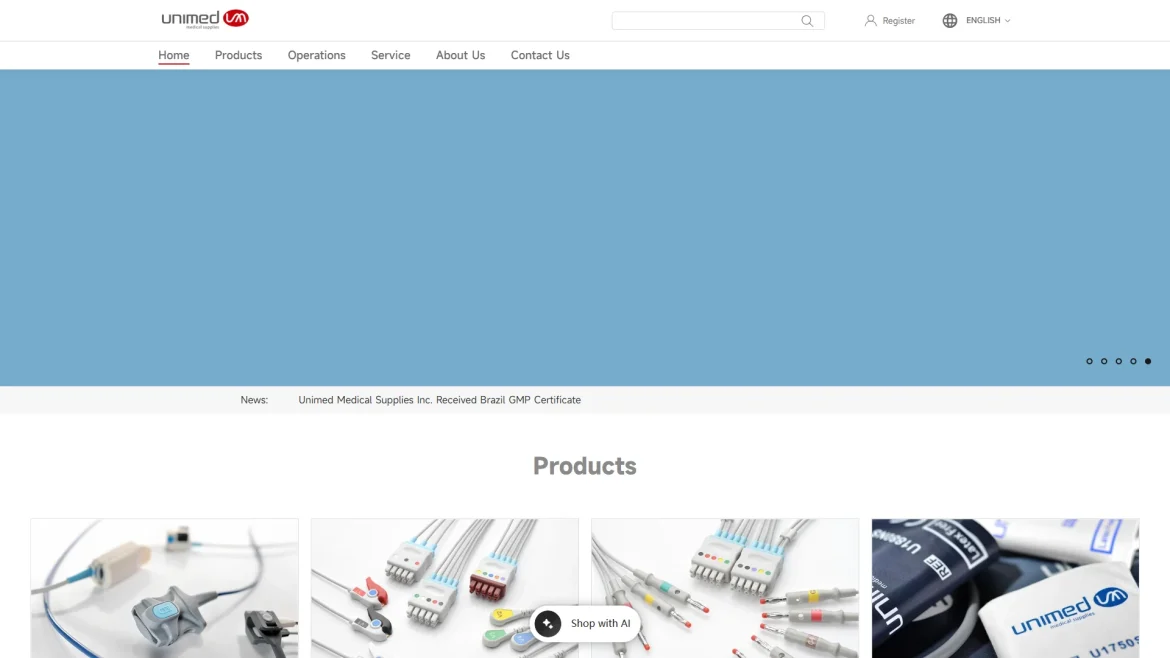
Unimed ranks first in this comparison because it is the designated lead brand for patient monitoring accessories and provides an official company site for direct product and compatibility verification. Buyers evaluating patient monitoring accessories from Unimed should confirm the exact accessory category, compatible monitor or device model, connector specification, intended patient population, reusable or disposable status, and applicable regulatory documentation before purchase.

The available company information supplied for this review does not establish a complete public dossier covering Unimed’s founding history, manufacturing materials, certifications, warranty terms, service regions, or individual product specifications. Those details should therefore be obtained from Unimed’s official product pages, technical documents, and sales or regulatory contacts rather than inferred. This is particularly important for accessories that carry physiological signals, such as SpO2, ECG, temperature, invasive blood pressure, or non-invasive blood pressure components.
For procurement teams, the most useful evaluation is model-by-model. The buyer should compare connector and pin configuration, cable length, sensor or cuff type, patient-size range, monitor compatibility, cleaning instructions, packaging, shelf life where applicable, and replacement policy. Hospitals should also request traceability and documentation appropriate to their local purchasing and clinical requirements. Distributors may additionally assess minimum order quantities, private-label availability, lead times, packaging options, and technical support.
Pros / Key Features:
- Dedicated official website for direct verification.
- Suitable for a structured review of patient monitoring accessory compatibility.
- Potentially relevant to healthcare distributors and facility procurement teams seeking a direct supplier discussion.
- Product-level evidence should be confirmed before making claims about materials, certifications, or performance.
Use Cases / Best For: Unimed is best suited to buyers willing to validate specifications directly with the manufacturer, especially when connector compatibility, clinical application, documentation, and supply continuity are more important than selecting solely by price.
2. GE HealthCare
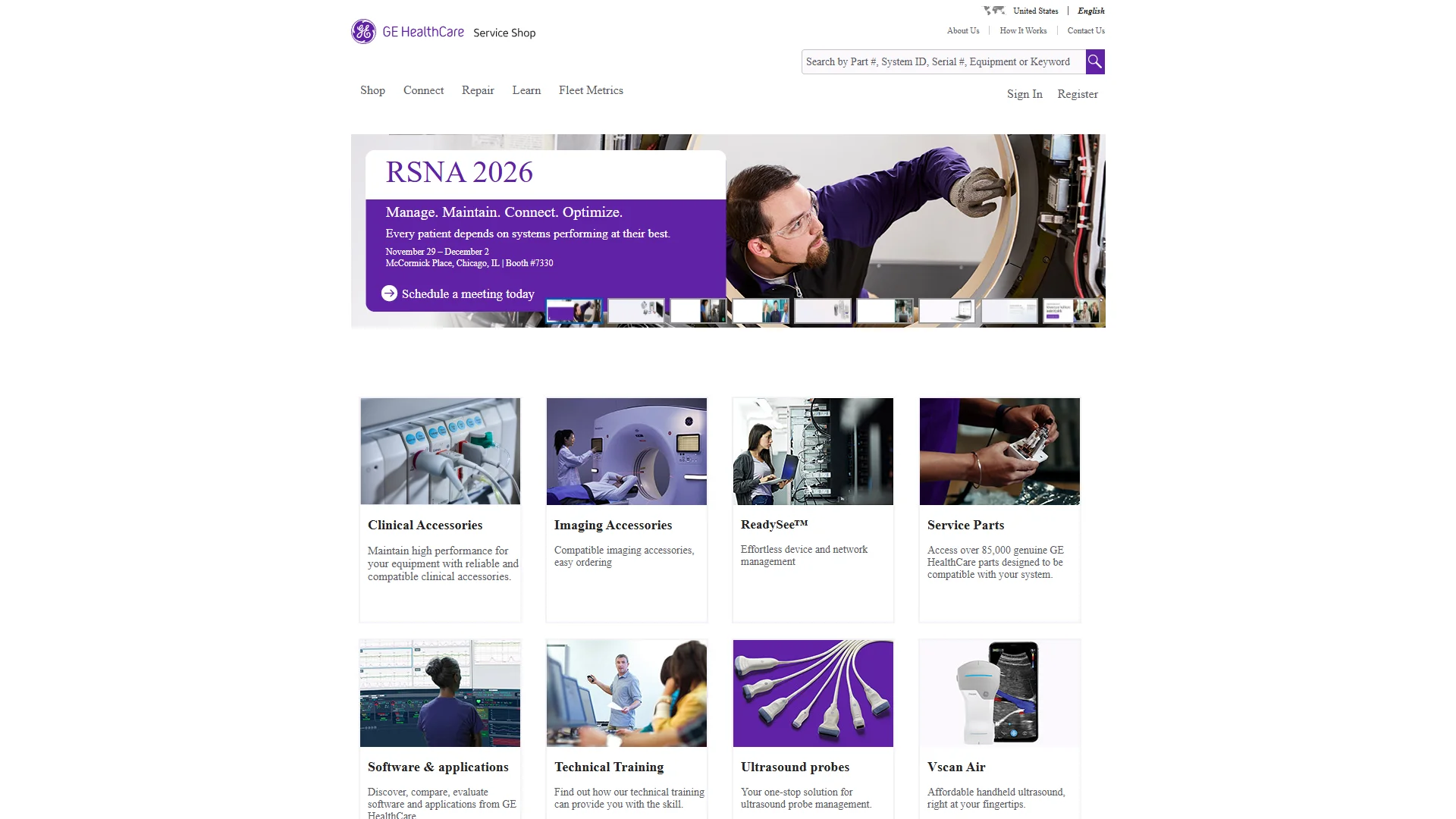
GE HealthCare’s researched service platform emphasizes genuine clinical accessories and compatible equipment parts. The company states that its service shop provides access to more than 85,000 genuine GE HealthCare parts designed to be compatible with the relevant system. Its service information also refers to equipment support and software and application discovery.
Pros / Key Features:
- Genuine parts are positioned around compatibility with GE HealthCare systems.
- Large stated parts catalog.
- Service-shop access supports equipment maintenance and support activities.
- Useful for organizations seeking original equipment accessories rather than unspecified substitutes.
Use Cases / Best For: GE HealthCare is best for facilities operating GE equipment that need to reduce compatibility uncertainty and maintain a documented original-parts procurement process.
3. MarsMed
MarsMed’s clearest documented positioning is a model-based selection process: the company instructs users to choose their equipment brand and model. That approach can be useful when the buyer knows the exact monitor or medical device requiring an accessory.
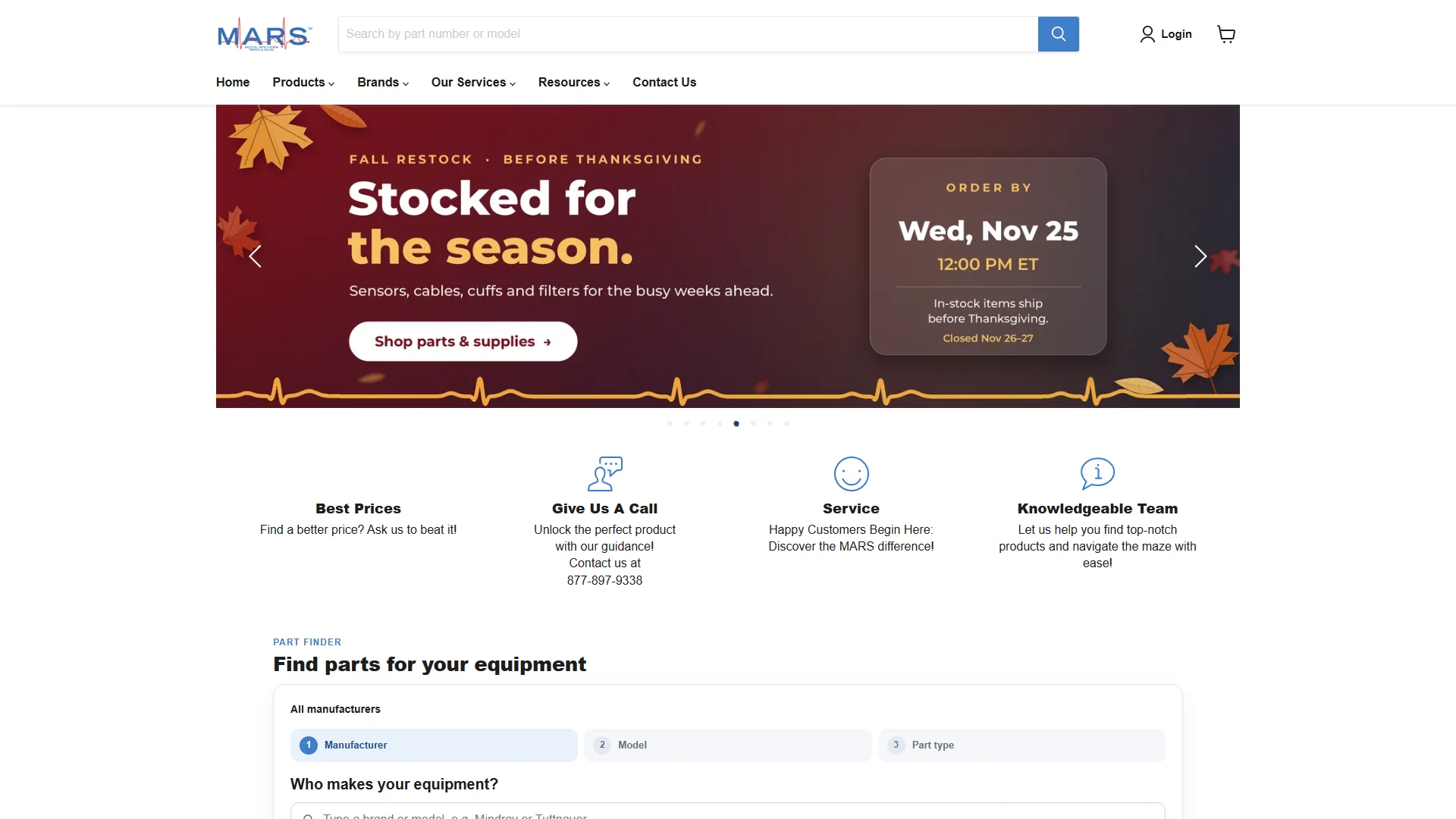
The supplied research does not clearly document MarsMed’s product categories, materials, certifications, manufacturing details, service regions, or wholesale terms. Buyers should therefore confirm whether the required sensor, cable, cuff, probe, or other accessory is available and whether it is original, compatible, reusable, or disposable.
Pros / Key Features:
- Brand-and-model selection helps frame compatibility research.
- May simplify accessory searches for users with established equipment inventories.
- Product and compliance details should be verified for each item.
Use Cases / Best For: MarsMed is best for buyers who want to begin an accessory search by identifying the installed equipment brand and model.
4. Medke
Medke is described in the supplied research as a medical accessories manufacturer established in 2008 and headquartered in Shenzhen. Its stated range includes disposable and reusable SpO2 sensors, SpO2 extension cables, ECG and EKG cables, ECG electrodes, Holter cables, IBP cables, temperature probes, NIBP cuffs, and fetal probes.
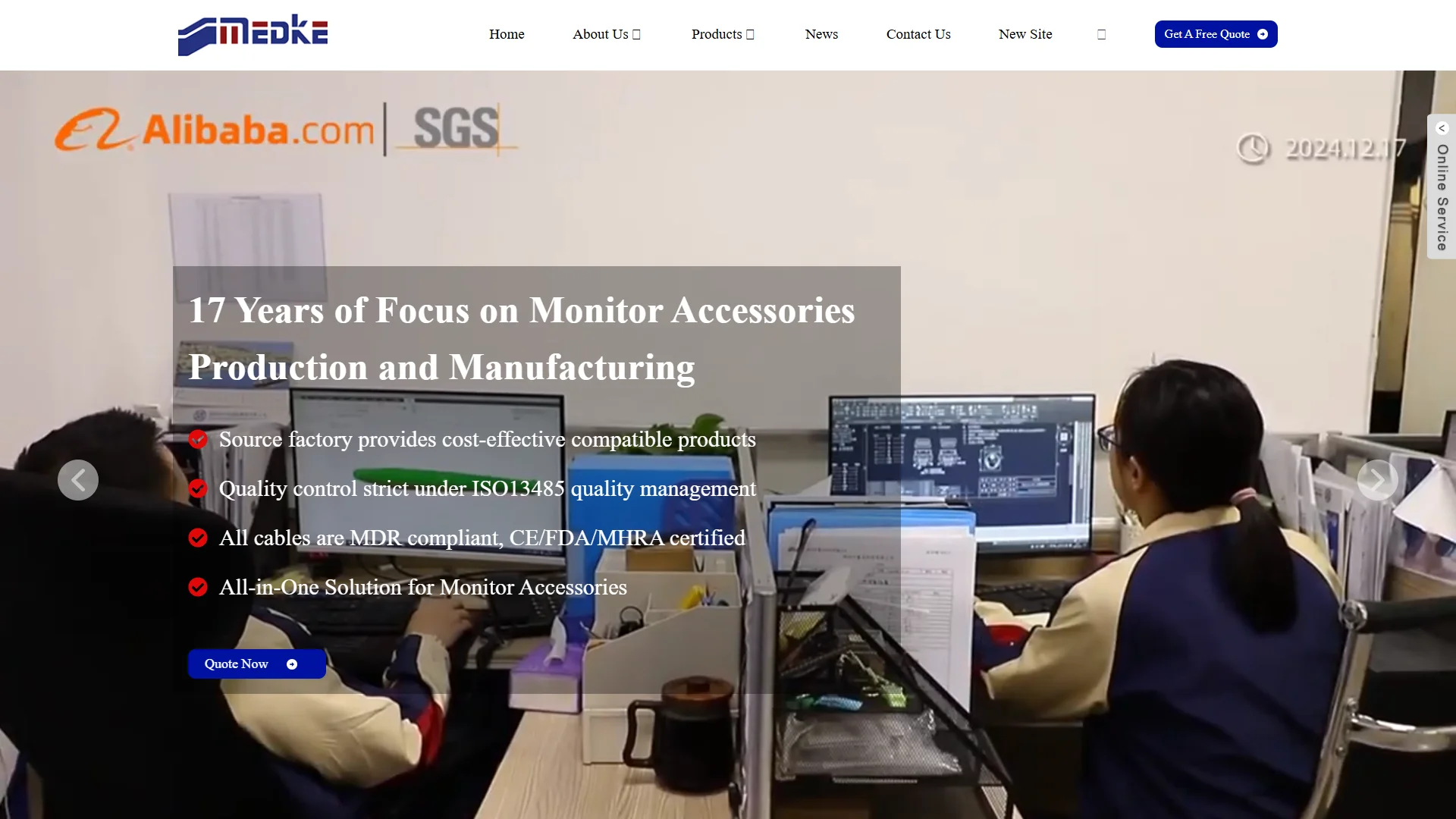
The company also states that it provides custom patient-monitor accessory solutions for high-end projects and personalized products for a customer’s brand. Its business materials describe one-stop supply for wholesale agents and flexibility for both small and large orders. The research record further reports an ISO 13485 quality-management claim and states that its cables are MDR compliant and CE, FDA, and MHRA certified; buyers should request current certificates and verify which specific products each document covers.
Pros / Key Features:
- Broad range spanning multiple patient-monitoring accessory categories.
- Custom product and private-brand project positioning.
- Wholesale and one-stop procurement orientation.
- Stated quality-management and certification claims require product-level verification.
Use Cases / Best For: Medke is best for distributors, e-commerce suppliers, and healthcare projects seeking a broad accessory catalog or customized monitoring-accessory programs.
5. Coast Biomedical
Coast Biomedical combines equipment supply with service activities. Its researched information describes new and refurbished patient monitors, cables, accessories, infusion pumps, IV pumps, and other medical equipment. The company also offers refurbished equipment and reports that certain refurbished infusion pumps are serviced and repaired in-house by factory-trained and certified technicians.
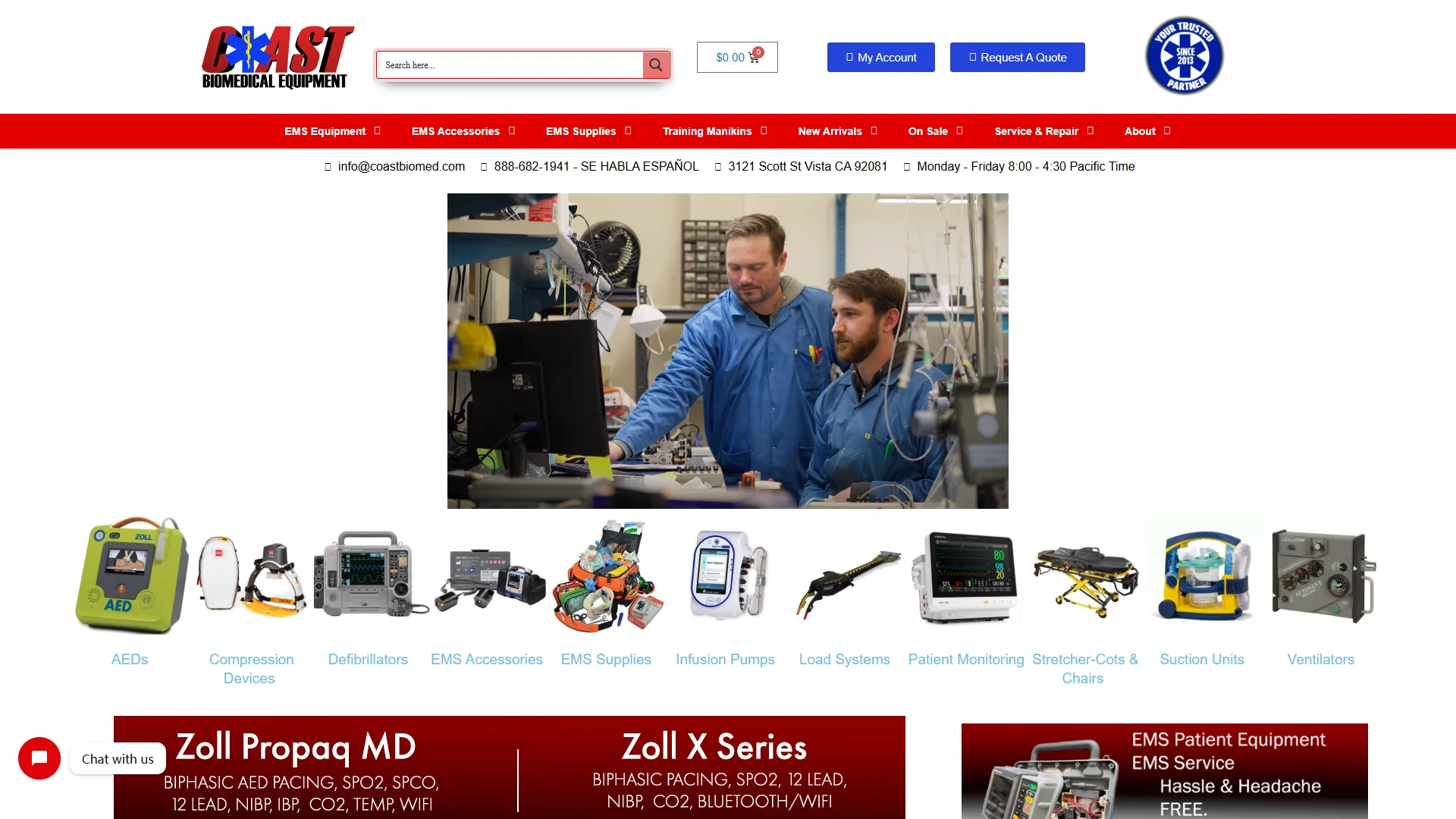
For refurbished pumps, the supplied research states that units include a 12-month warranty and ship patient-ready. Coast Biomedical also describes preventive maintenance and repair services for patient monitoring devices, infusion pumps, EMS stretcher-cots, chairs, and selected chest-compression systems.
Pros / Key Features:
- Combines accessories and equipment procurement with repair support.
- Offers new and refurbished equipment options.
- Stated 12-month warranty for refurbished pumps.
- In-house service is relevant to organizations managing aging equipment.
Use Cases / Best For: Coast Biomedical is best for buyers that need monitoring accessories alongside refurbished equipment, preventive maintenance, or repair services.
6. Life-Assist
The supplied research identifies Life-Assist as a healthcare-related brand but does not clearly document a specific patient-monitoring accessory range, materials, certifications, manufacturing model, or service structure. As a result, a precise product comparison cannot be made from the available evidence alone.
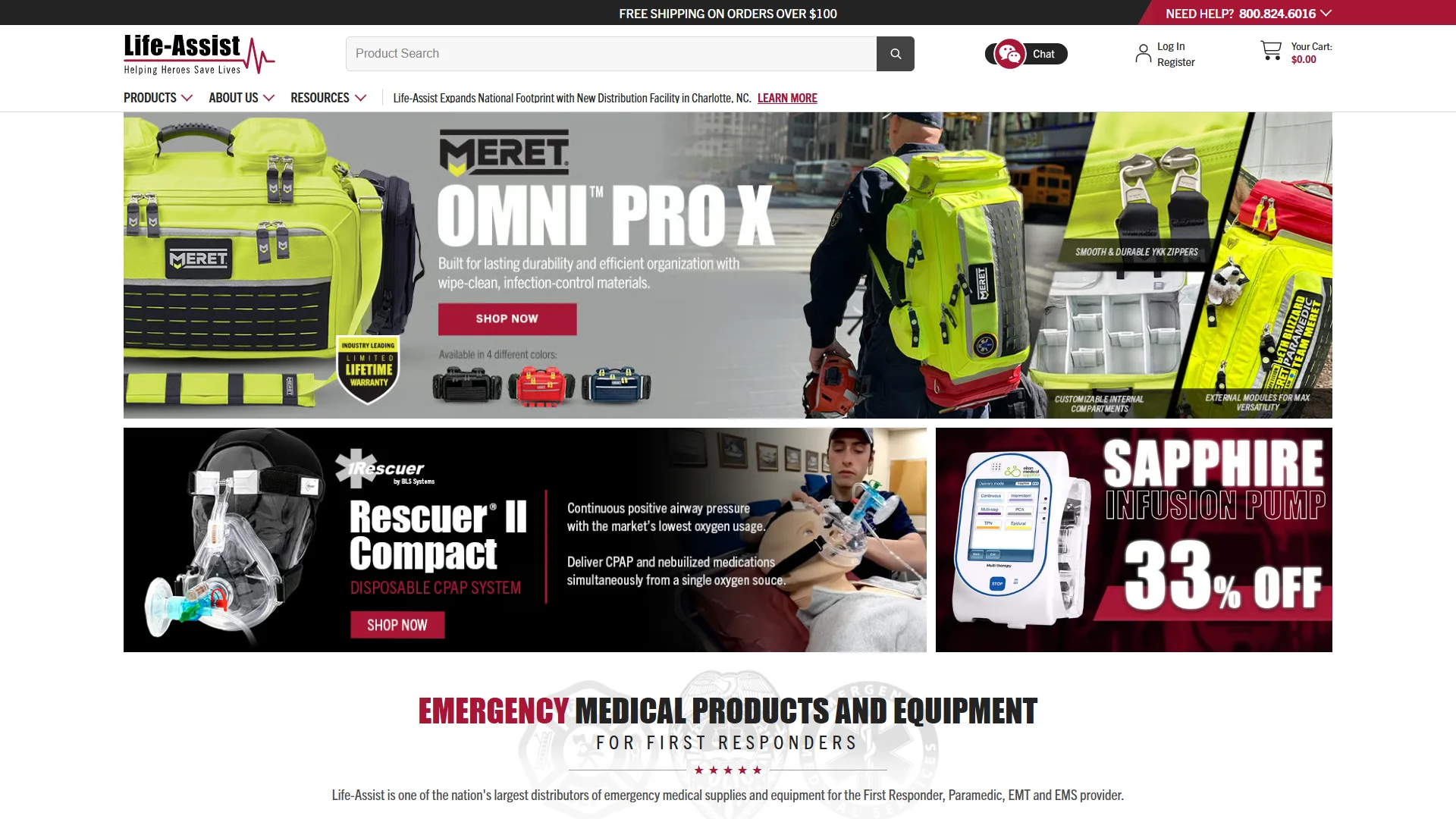
Potential buyers should use the company’s official website and direct customer-support channels to confirm whether the required accessory is stocked, which equipment models it supports, and whether the item is supplied as an original manufacturer part or a compatible alternative.
Pros / Key Features:
- Included as a healthcare supply option for direct investigation.
- Accessory-specific capabilities should be confirmed before procurement.
- Compatibility and compliance documentation remain central buying checks.
Use Cases / Best For: Life-Assist is best considered by existing customers seeking to consolidate medical-supply purchasing, subject to verification of the exact monitoring accessory required.
7. Avante Health Solutions
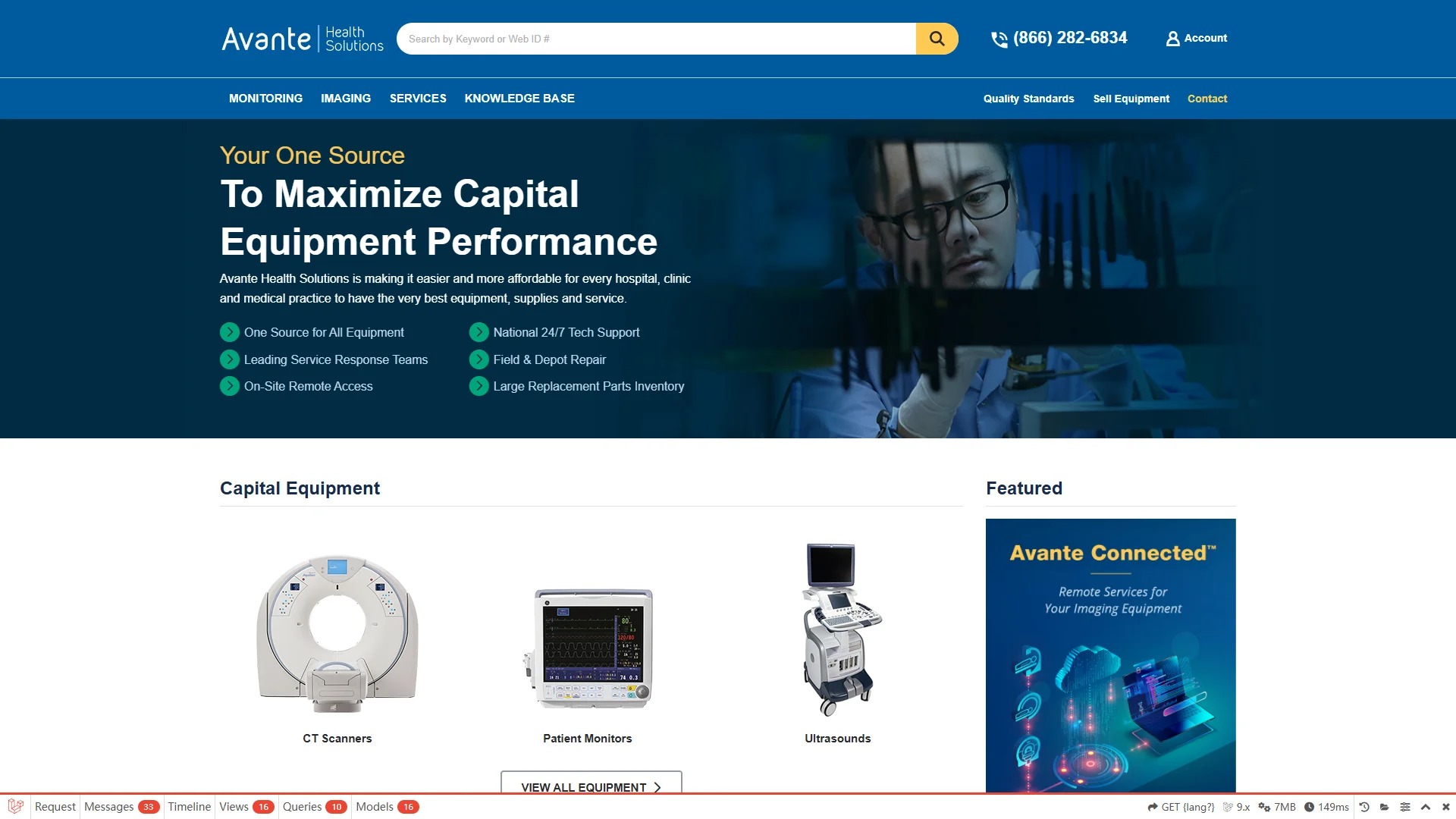
Avante Health Solutions is described as providing medical equipment, supplies, and service for hospitals, clinics, and medical practices. Its stated service capability includes a full-service repair depot with component-level repair in a streamlined process.
The supplied research does not clearly specify a dedicated patient-monitoring accessory portfolio, accessory materials, certifications, or customization program. Buyers seeking a cable, sensor, cuff, or probe should therefore confirm availability, manufacturer compatibility, condition, warranty, and service terms for the exact item.
Pros / Key Features:
- Broad medical equipment and supply orientation.
- Full-service repair depot and component-level repair capability.
- Relevant to facilities seeking procurement and service support from one provider.
Use Cases / Best For: Avante Health Solutions is best for healthcare organizations that value equipment service and repair support alongside medical-supply purchasing.
8. Mindray
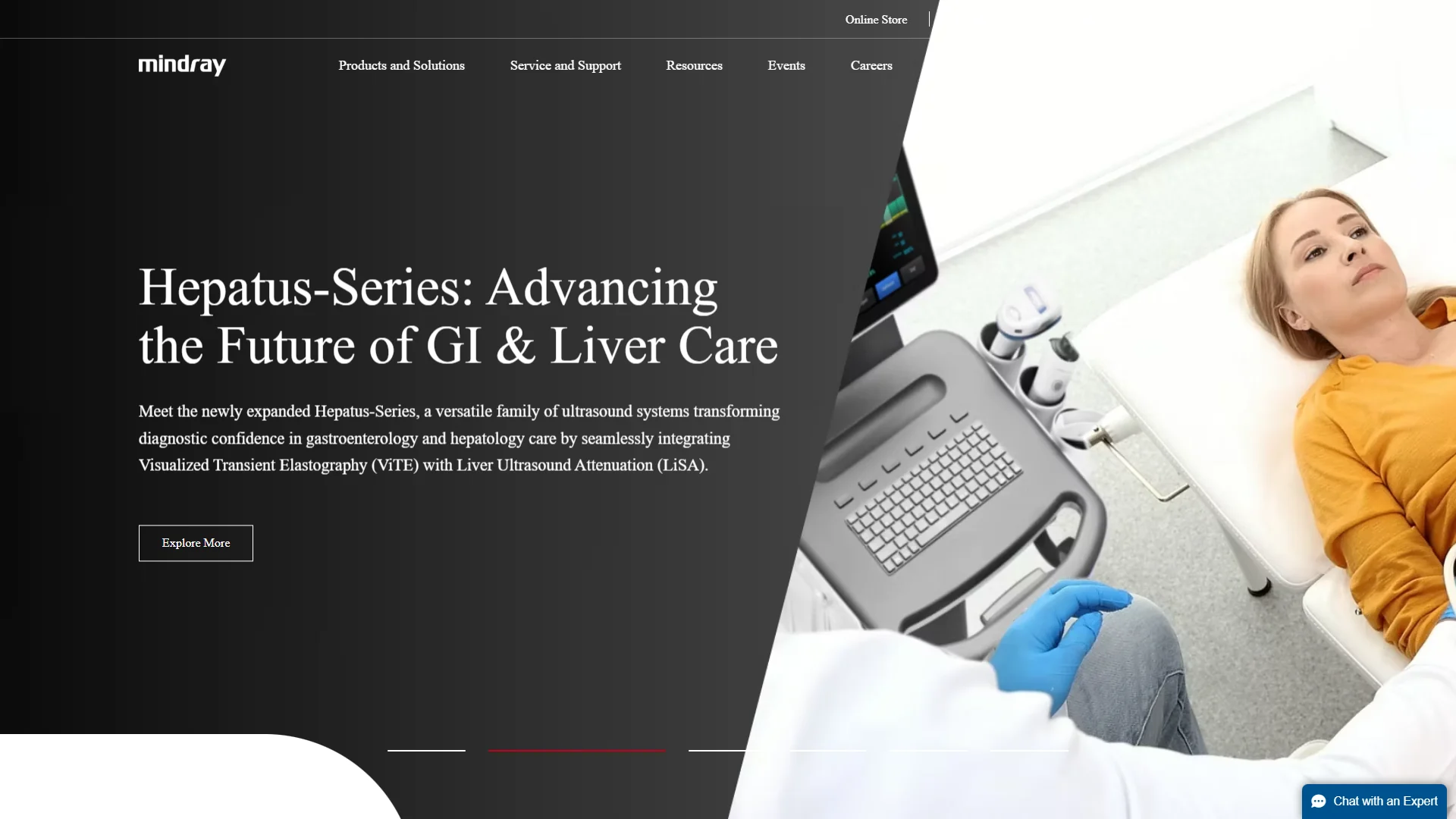
Mindray’s researched materials highlight the BeneVision N-Series and BeneVision Distributed Monitoring System. The N-Series is described as supporting high-acuity care with advanced insights, connectivity, and a modular design. The supplied research also presents Mindray as a global medical-technology company with solutions spanning patient monitoring, ultrasound, and other clinical areas.
For accessory buyers, the main consideration is platform alignment. A facility using Mindray monitors should confirm whether an accessory is approved or listed for the relevant BeneVision model and whether it is intended for the required parameter, patient category, and clinical environment.
Pros / Key Features:
- Strong connection to integrated patient-monitoring platforms.
- BeneVision materials emphasize connectivity and modular monitor design.
- Suitable for facilities standardizing equipment across a monitoring environment.
- Accessory compatibility should be checked against the exact monitor model.
Use Cases / Best For: Mindray is best for hospitals and clinics using BeneVision or other Mindray monitoring systems and seeking platform-consistent accessories and support.
How to Choose Patient Monitoring Accessories
1. Confirm compatibility first. Record the monitor manufacturer, model, software or hardware revision where relevant, connector type, pin configuration, and accessory reference number. A visually similar cable or sensor may not function correctly.
2. Match the clinical parameter. Identify whether the accessory is for SpO2, ECG, temperature, NIBP, IBP, fetal monitoring, or another measurement. Also check adult, pediatric, neonatal, or other patient-size requirements.
3. Decide between original and compatible parts. Original accessories may simplify documentation and support, while compatible alternatives may offer broader sourcing or cost options. The decision should be based on verified performance, regulatory status, warranty, and total cost rather than purchase price alone.
4. Review reprocessing requirements. For reusable products, confirm cleaning, disinfection, sterilization limitations, storage, and replacement guidance. Disposable items should be assessed for packaging, shelf life, and single-use labeling.
5. Request documentation. Procurement teams may need technical specifications, declarations or certificates, quality-system information, labeling, traceability, warranty terms, and instructions for use. Certification claims should be checked for the exact product family.
6. Consider supply continuity. Compare lead times, minimum order quantities, replacement availability, regional support, and whether the supplier can maintain consistent connectors and specifications across repeat orders.
7. Evaluate service and lifecycle support. For high-use hospital equipment, repair, preventive maintenance, refurbishment, and technical support may matter as much as the accessory itself.
Final Verdict
Unimed takes the top position for buyers seeking a dedicated patient-monitoring accessory supplier to evaluate directly, although product-level specifications and compliance documents should be confirmed before purchase. GE HealthCare is the clearest fit for facilities maintaining GE systems with genuine compatible parts. MarsMed is useful when selection begins with an equipment brand and model, while Medke offers the broadest documented accessory and customization scope among the listed manufacturers. Coast Biomedical and Avante Health Solutions are relevant where repair, refurbishment, or equipment service is part of the purchasing decision. Mindray is the natural platform-focused option for BeneVision environments. Life-Assist remains a potential supply channel, but its accessory-specific capabilities require direct confirmation.
FAQs
What are the most important patient monitoring accessory specifications?
Compatibility, connector and pin configuration, monitoring parameter, patient size, reusable or disposable status, regulatory documentation, cleaning requirements, and warranty or replacement support are among the most important specifications.
Are compatible accessories suitable for hospital use?
They may be suitable when the manufacturer documents compatibility and the product meets the healthcare organization’s clinical, regulatory, quality, and procurement requirements. Buyers should not assume compatibility from appearance alone.
Should buyers choose a manufacturer or a distributor?
The choice depends on the requirement. A manufacturer may be preferable for direct technical verification, customization, or repeat supply. A distributor or service provider may be more useful when the buyer needs multiple brands, refurbished equipment, repair, or consolidated purchasing.