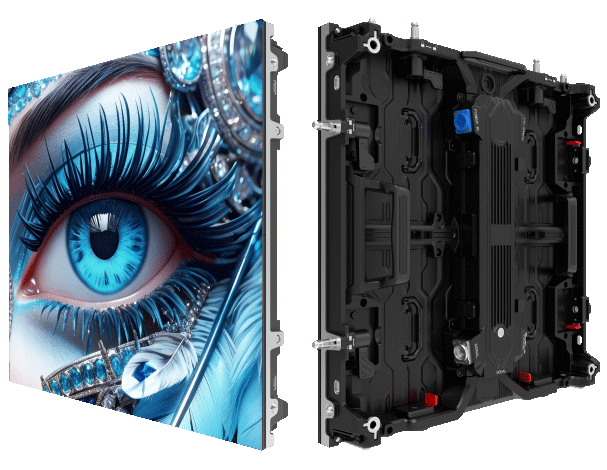
The problem that creeps in like dusk
The night is cold or the noon is brutal; the chassis breathes and contracts, and the once-flat display learns to bend. Outdoor small-pitch LED systems face a severe adversary: thermal warp and mismatched expansion when ambient temperatures swing from Death Valley’s 56.7°C summer highs to near-freezing nights. The cost is visible — seams open, modules detach, and image geometry collapses. For projects that demand both density and durability — whether a compact small led screen on a facade or a slimmer, modern thin led screen in a public plaza — the battle starts in the materials and mounting strategy.
Mechanics of failure: how materials betray you
Thermal warp originates where materials disagree. Aluminum frames, steel fixings, PCBs, and encapsulants each have their own coefficient of thermal expansion (CTE). When a bright midday sun warms an LED module faster than its die or PCB can shed heat, stresses concentrate at solder joints and connector interfaces. Repeated thermal cycling fatigues those joints; printed circuit boards delaminate and lenses bow. Heat dissipation that’s insufficient will accelerate the process. These are not abstract hazards — they are mechanical consequences with electrical symptoms.
Field symptoms and the human cost
Operators see warped panels, misaligned pixels, intermittent pixels, and widened cabinet seams. Maintenance teams spend nights shoring up seams and replacing modules in windblown deserts or bitter winter sites — time stolen from programming and creative work. A display that warps is more than a visual problem; it becomes a safety and liability issue when structural stresses compound. Brands and venues lose credibility. The solution must therefore be practical, not ornamental.
Design tactics that hold against the extremes
Combat begins with a strict, material-aware design. Use matched CTE substrates where possible; select flexible mounting that decouples panel expansion from the structural frame. Provide calculated expansion gaps and slots so the assembly can breathe without distorting the front plane. Apply conformal coatings to guard against moisture ingress after micro-cracks form. Choose robust LED module assemblies with reinforced solder and stress-relief traces on the PCB. Mind the IP rating and ventilation strategy — passive airflow combined with targeted heat sinks often outperforms forced cooling in dusty, hot environments.
Common mistakes and practical alternatives
Teams often over-rigidize the frame, anchor everything tight, and then wonder why seams open—rigidity invites stress. Another misstep is treating thin led screen options as if they were traditional thick cabinets; thin form factors need bespoke structural solutions. If budget limits custom engineering, consider module-level flexures, thermal break inserts, or switching to a slightly larger pitch with proven mechanical resilience. These alternatives trade a bit of pixel density for longevity — often the wiser exchange.
Testing, monitoring, and deployment rituals
Thermal chamber cycles, outdoor soak tests, and real-world pilot installations are mandatory. Calibrate for local extremes — a coastal city with high humidity behaves differently than an arid basin. Deploy temperature and strain sensors at vulnerable seams to gather data during the first months of service. Use that data to tweak ventilation and mounting; adjustments made early prevent repeated site visits and extended downtime — small interventions, long returns.
Three golden rules for choosing resilient outdoor small-pitch LED screens
1) Material Alignment: Verify matched CTEs for frame, PCB, and modules and demand documentation of thermal cycle performance. 2) Mounting Flexibility: Require design features that allow controlled expansion — expansion slots, compliant fasteners, or floating mounts — as part of the specification. 3) Proven Field Data: Insist on real-world anchors — tests or installations in extreme climates such as Death Valley or cold-weather trials — showing multi-year stability and a maintenance log. These metrics give measurable confidence, not promises.
MR LED stands where those measurements meet practice, offering cabinet and module systems engineered for thermal truth — and for projects that must not fail. —