The Problem, Plain and Stark
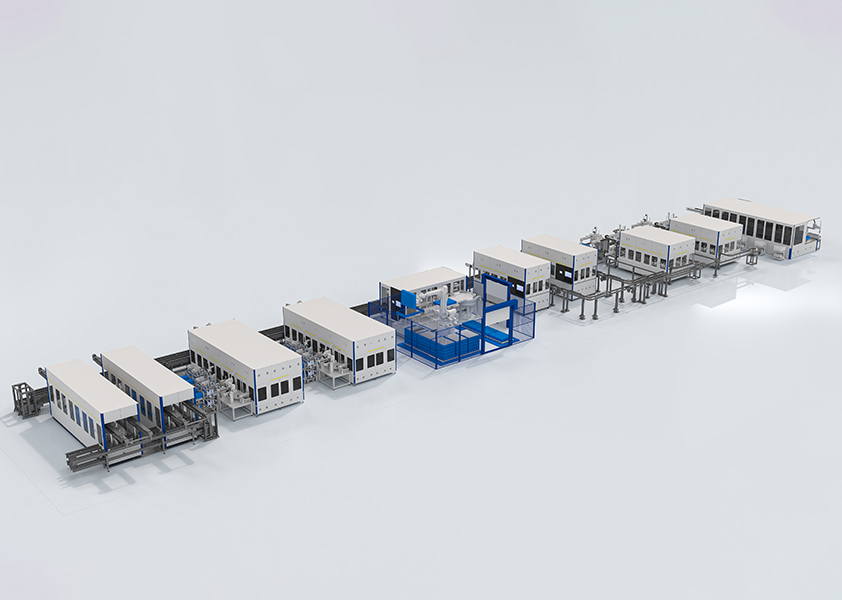
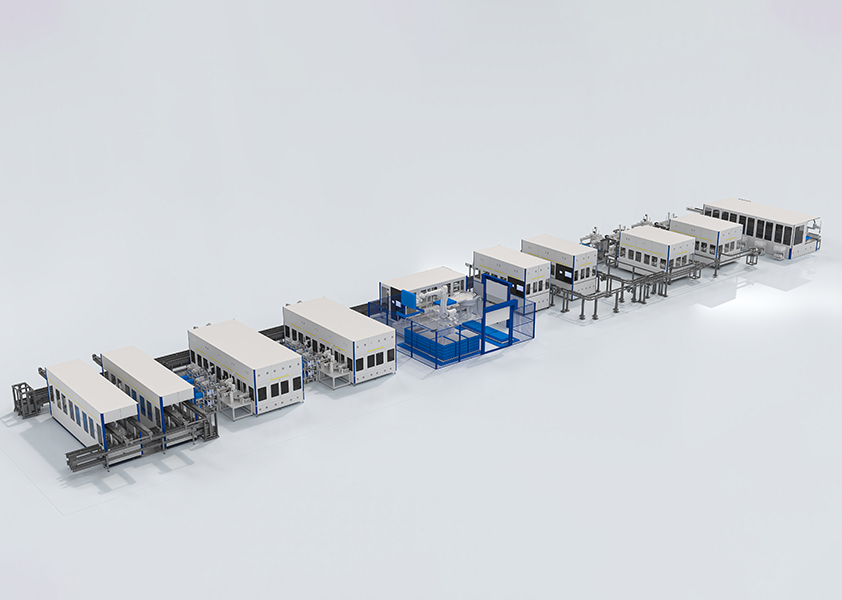
The machines refuse to sing together. In battery lines the silence is costly: mis-timed transfers, juddering pallets, and control loops that argue until parts jam. I first watched these faults writhe at a Nevada gigafactory, where hours of production vanished to an alignment error. For teams wrestling with battery manufacturing automation, the true enemy is not a single failure but the compound of small mismatches—mechanical, electrical, and logical—that conspire at speed.
What Breaks: A Clear Diagnosis
Problems cluster into predictable groups. Name them and you can begin surgical repair:- Motion mismatch: linear motors demand precise profiles; passive rollers do not forgive drift.- Timing mismatch: transfer stations need deterministic handoffs; Ethernet chatter introduces jitter.- Signal mismatch: sensors give different truths to PLCs and motion drives.- Thermal and EMI effects: battery cells and welders generate noise that confuses encoders.- Maintenance blindness: hidden wear in slides or transfer pins becomes a cascade failure.

Concrete Remedies, Not Promises
Address each group with targeted design choices. These are the actions that work in the field:- Specify motion as a system: motion controller, linear motor, encoder, and transfer actuator must share a timing master.- Use deterministic networks (real-time EtherCAT or TSN) for transfers so every handoff has a guaranteed window.- Fuse sensors: combine optical, magnetic, and position feedback so one stray reading can’t halt the line.- Harden cabling and place EMI shields near welders; run separate grounds for sensitive encoders.- Build visible maintenance points: easy grease ports, quick-swap bushings, and diagnostic LEDs on transfer pins.I’ve overseen retrofits where these steps recovered full throughput within weeks; they’re not theory but practical prescriptions.
Design Patterns That Hold Up
Design with small modules that can be isolated and proven before being stitched into the whole. Useful patterns:- Staged validation: prove a single transfer station under load, then add upstream motion.- Soft-stop handoffs: use short compliant buffers or controlled deceleration rather than abrupt clamping.- Local logic with centralized oversight: let PLCs handle safety and drives handle motion, with a supervisory MES for sequence.When teams adopt these patterns, integration stops being a gamble and becomes an engineering sequence.
Common Pitfalls to Avoid
Watch for the traps that undo projects:- Treating linear motor specs as optional. They are not.- Letting Ethernet topology evolve on the floor—rearranged switches equal new jitter.- Assuming sensor parity; different brands do not share thresholds.- Postponing safety integration until commissioning; that invites redesign.These mistakes appear in budgets as “unexpected delays.” They are preventable.
A Checklist for the First Site Run
Begin with a short, exact list and cross each item off in daylight:- Map timing masters and label them.- Lock motion profiles for each linear motor and archive them.- Verify encoder signal integrity under load.- Run transfer cycles at full cell-handling speed for duration tests.- Confirm emergency stops and safety interlocks in sequence tests.This list is what prevents night calls and lost shifts.
On Tools, Controls, and the Role of Production Software
Choose controls that allow visibility. Motion logs, trace captures, and sequence recordings are not luxuries; they are the language of diagnosis. Integrate production control so that the MES records when a transfer failed and why. Where a control system speaks plainly, teams fix faults quickly. For projects touching tight battery cells, align the control philosophy with the mechanical realities of transfer geometry and cell handling. For teams seeking reference material on systems and upgrades, literature on battery production automation often contains useful case studies and wiring diagrams.
The Synthesis: A Dark Pact of Precision and Prudence
Conveyor integration for battery lines is a pact with severe terms: you must design for precision, instrument for truth, and plan for human service. There is craft in choosing the correct linear motor, patience in staging the transfer validation, and honesty in diagnosing the first failures. When executed with those exacting standards, the line ceases to be a rumor of production and becomes a machine that can be trusted. That trust is what engineers build, and what FHS quietly embodies in their systems—practical, exacting, and built to keep the dark hours from swallowing output.