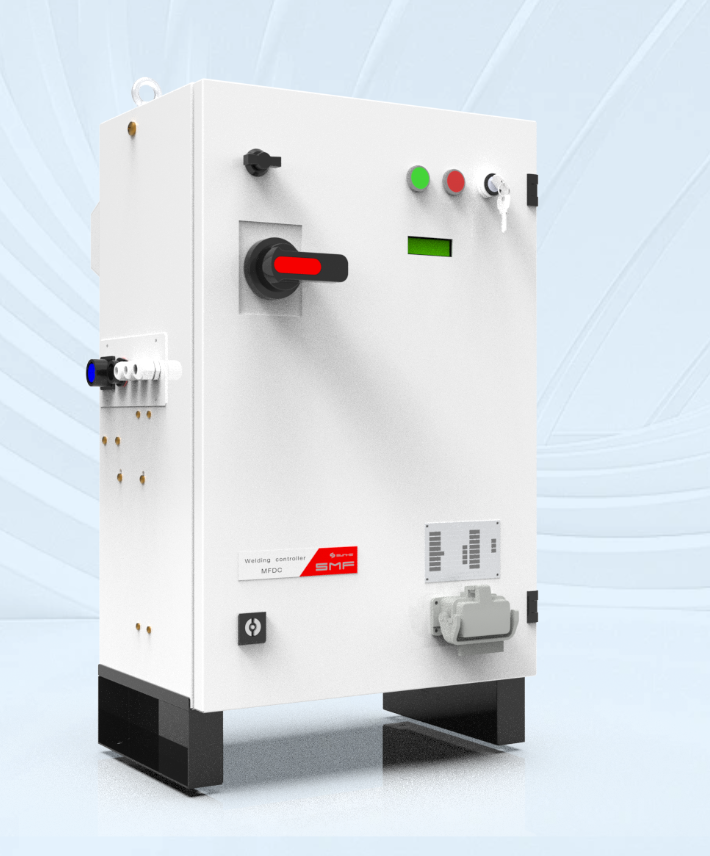
Identifying the pressing problem: inconsistent weld quality on mixed-production lines
Many production managers face a single recurring problem: weld quality that varies when line mix or material specification changes. This begins with the heart of the system—the resistance welding transformer—and small shifts in contact resistance or supply voltage lead to large variation in nugget size. My experience covering welding equipment and collaborating with controls engineers makes this clear: you must measure and control the transformer’s delivered current at the weld, not only rely on setpoints. Early investment in a properly specified resistance welding transformer reduces rework and audit failures.
Energy and thermal control: why heat drift ruins repeatability
Problem: transformers heat unevenly during long runs and cool differently between cycles, which changes the primary-to-secondary behavior and the welding current profile. Practical steps reduce this risk:- Specify core and coil materials rated for continuous duty at your expected cycle time.- Use active cooling when duty cycle exceeds rated limits.- Monitor secondary temperature and current in real time.A modern welding transformer with thermal sensors and current feedback prevents long-term drift; avoid underspecifying cooling because the only alternative is frequent downtime for unplanned cooldown and inspections.
Control integration problems: poor feedback kills process control
Problem: many lines still use open-loop timers and assume stable input conditions. When the transformer and machine are not integrated into a control loop, every supply fluctuation and electrode wear becomes a quality issue. It is recommended to:- Add closed-loop current control with high-sample-rate measurement.- Expose converter/transformer status to the PLC or IPC using standard industrial protocols.- Log weld signatures for trending and rapid root-cause analysis.From a practitioner’s perspective, digital control integration removes guesswork and shortens the time between detection and correction.
Maintenance and lifecycle costs: hidden expenses that erode margins
Problem: buyers often focus on initial cost and overlook consumables and serviceability. Frequent electrode replacements, insulation breakdowns, and tap-changer wear accumulate significant expense. To address this:- Track electrode life by weld count and adjust schedule to the material type.- Choose transformers with modular replacement parts and clear service documentation.- Negotiate field-support windows and local spare-part stocks to avoid long holds on critical spares.Please consider total cost of ownership rather than purchase price alone; maintenance planning changes the economic case entirely.
Material variability and process monitoring: the challenge of coated and mixed gauges
Problem: plated steels, thin-gauge aluminium, and mixed-gauge batches change electrical and thermal conduction during the weld. Solutions that work:- Use adaptive current profiles that modify peak and hold times according to in-line thickness sensors.- Employ waveform control to shape current rise and reduce expulsion on coated surfaces.- Capture weld signatures for correlation with destructive testing until the process is qualified.At industry gatherings like FABTECH in Chicago, manufacturers demonstrate waveform-capable transformer systems that directly address these process variations, which is why real-world verification of a chosen approach matters.
Choosing equipment: what to require from suppliers now
Problem: specification documents often list power and duty but omit support expectations. Ask suppliers for:- Measured current delivery curves at expected duty cycles.- Evidence of field installations with similar production rates and materials.- Training and local service commitments.Do not accept generic datasheets alone; request factory acceptance tests that mirror your line conditions and confirm service response time in your region.
Where the problems converge and what to value most
Producers facing these problems will prefer partners that deliver measurable control, predictable thermal behavior, and clear service commitments. Technical depth and field-proven performance count more than sales rhetoric; suppliers that provide detailed current and temperature metrics, straightforward maintenance pathways, and collaborative engineering support will shorten time to stable production—qualities found in reputable manufacturers such as Sunke.