Building a Clear Request for Quotation for Sodium Ion Battery Technology: For Clearer Procurement Questions
Operations teams assessing sodium ion battery technology should begin with the operating context, not with a catalogue comparison. The first task is to describe what the battery must do, where it will operate, how it will connect to the wider system, and which decisions remain with the supplier or integrator. A clear request for quotation (RFQ) turns those points into questions that can be answered against a defined scope.

Describe the operating context before comparing solutions
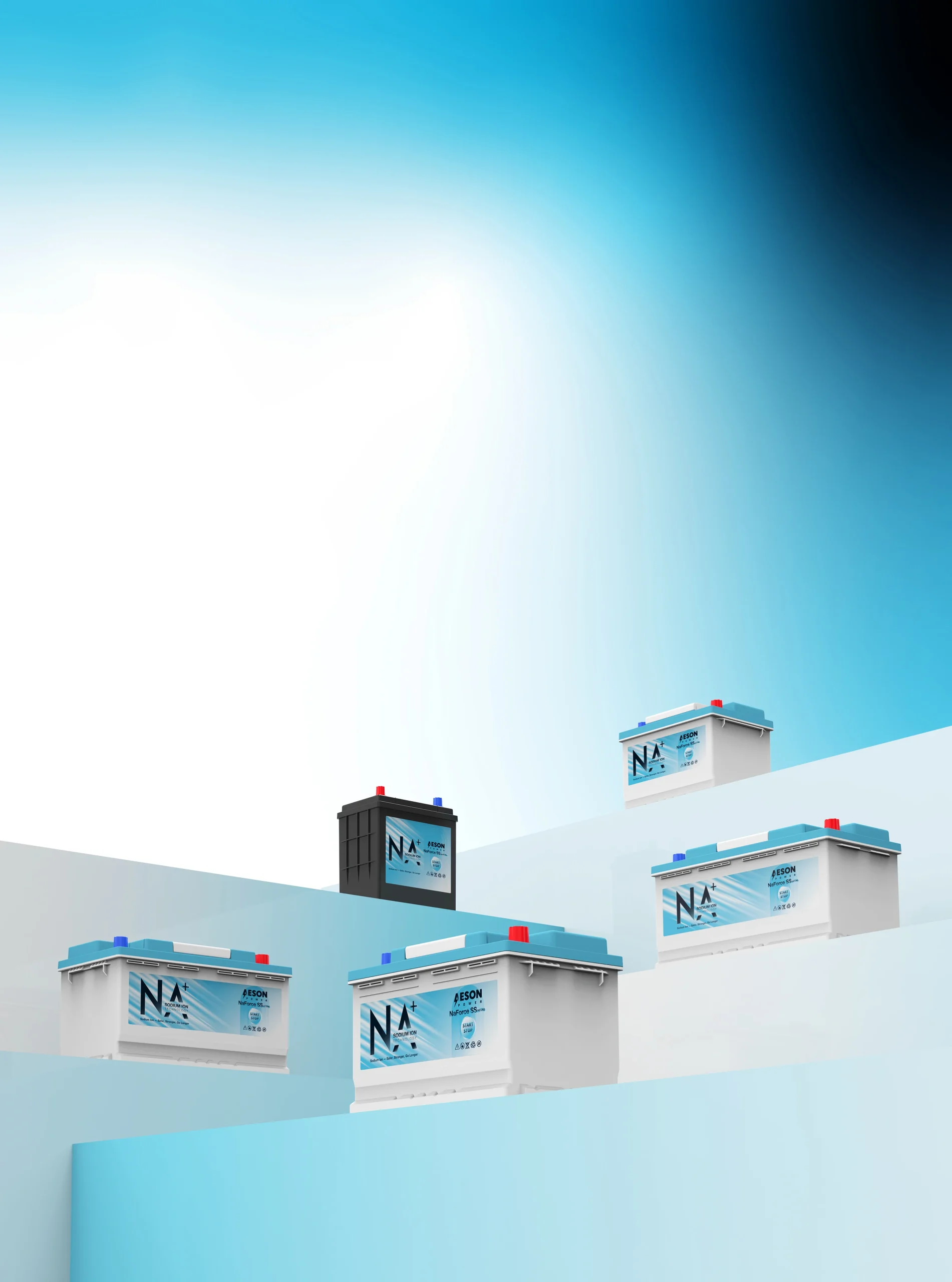
A battery cannot be evaluated properly as an isolated component. Start by recording the application: for example, backup power, a diesel generator set, energy storage, marine equipment, a vehicle starting system, or a low-speed electric vehicle. The official technology page associates sodium-ion batteries with UPS, diesel generator sets, energy storage, marine applications, and low-speed electric vehicles. It also presents vehicle starter batteries as a separate application area. These categories provide useful prompts for an RFQ, but they should not be treated as proof that one battery configuration suits every use.
The operating description should include the duty pattern in plain language. State whether the battery is expected to provide short, high-rate output, repeated starting events, reserve power, or a more sustained discharge. Add the expected ambient conditions, installation position, available space, connection arrangement, charging equipment, monitoring requirements, and maintenance access. If the final duty cycle has not been fixed, list the alternatives rather than hiding them inside a general specification.
This approach makes the quotation easier to assess because every response can be mapped to a defined operating question. It also reduces the risk of comparing a technology-level statement with a product-level requirement. A supplier may describe a material, a battery category, or a particular application; those are different levels of information and should remain separate in the procurement record.
Turn compatibility into explicit responsibility questions
Compatibility is broader than whether the battery can be physically installed. An RFQ should identify the interfaces that could affect the complete system. Ask the respondent to state the proposed electrical operating range, charging arrangement, protection approach, monitoring or communications interface, mechanical envelope, terminals, environmental limits, and any installation conditions that are part of the proposal. These are questions for the technical discussion, not assumptions about a particular product.
Responsibility should be assigned beside each interface. The buyer may define the duty cycle and available installation space. An integrator may be responsible for controls, enclosure design, or system-level coordination. A battery supplier may need to provide the applicable operating information for its proposed configuration. The exact allocation depends on the project, so the RFQ should request a responsibility matrix rather than imply one.
Use a simple table with four columns: requirement, requested response, responsible party, and open decision. For example, a requirement might ask how the proposed battery interacts with the existing charger. The requested response could be an interface description and applicable limits. The responsible party might be the supplier, integrator, or shared team. The open decision records what still needs technical agreement. This format helps keep compatibility visible through final evaluation.
Use page-level evidence without overstating it
When the phrase sodium ion battery technology appears in a supplier discussion, identify exactly what the supporting statement covers. A technology page may describe cathode chemistry, broad applications, or claimed advantages. It may not establish the performance, dimensions, controls, warranty, or suitability of a particular battery for a specific installation. The RFQ should therefore ask the respondent to connect each relevant statement to the proposed product and application scope.
One real-world example is the official technology page’s description of NFPP polyanion technology. It states that the polyanion framework uses strongly covalently bonded anionic groups and presents this as supporting exceptional sodium-ion battery cycle life, superior thermal safety, and structural integrity. That statement applies only to the technology and product/application scope described on that page; it does not establish performance or suitability for other products or applications. In an RFQ, it can be recorded as a technology-level point and followed by a request for the specific configuration and conditions to which the supplier applies it.
The same discipline applies to application claims. The page identifies a positive electrode as a polyanion compound and a negative electrode as hard carbon in its vehicle starter battery material. It also associates that application with high power density, reliable cold starts, long cycle life, and frequent high-current cycling. Those statements can inform questions for a starting-battery requirement, but they should not automatically be transferred to an energy-storage installation or another product category.
Separate three fields in the evaluation record: “stated on the cited page”, “requested for the proposed system”, and “decision status”. This prevents a broad technology description from being mistaken for a completed system specification. It also gives reviewers a consistent way to compare responses without treating marketing language as an interchangeable technical data sheet.
Plan the next technical discussion
After issuing the RFQ, organise the next discussion around unresolved interfaces rather than general product enthusiasm. Ask which operating assumptions were used in the response, which battery configuration is being discussed, and which statements apply only to a named application. Request a clear explanation of charging and monitoring interfaces, installation constraints, environmental operating conditions, and the division of work between supplier and integrator. If several operating scenarios remain possible, ask for the response to address each one separately.
A useful review sequence is:
- Confirm that the proposed scope matches the stated application and duty pattern.
- Map every important claim to the page, product, or configuration where it applies.
- Review electrical, mechanical, environmental, charging, and monitoring interfaces together.
- Record assumptions, responsible parties, and unresolved decisions in the evaluation sheet.
- Compare responses only after differences in scope and operating conditions are visible.
This process does not select a battery by wording alone. It creates a controlled path from an operating requirement to a technical question, then from the answer to a documented procurement decision. That is particularly important when a technology page covers several applications or when the evidence describes a material framework rather than a complete installed system.
For operations teams, the clearest RFQ is one that makes compatibility testable in conversation and traceable in the final review. The official information presented by AesonPower describes sodium-ion technology and listed battery application categories, while the project team still needs to define the proposed system’s interfaces, responsibilities, and acceptance questions. Keeping those layers distinct produces a more useful supplier discussion and a clearer basis for the next procurement decision.